
Democracy Dies with Dictatorship
Newsweek
Jul 30, 2025
Free Speech Sees Rare Win in Iran
By Amir Daftari
Iran's government has abruptly withdrawn a proposed internet censorship bill following growing political pressure and public opposition.
The legislation—introduced in the aftermath of a 12-day war with Israel—sought to impose sweeping penalties for online activity deemed false or harmful, alarming human rights advocates and reformist leaders who warned that it threatened civil liberties, contradicted campaign promises and risked institutionalizing censorship.
Newsweek has contacted Iran's Foreign Ministry for comment.
Why It Matters
The legislation's introduction and swift rejection highlight growing tension within Iran over the balance between national security and civil rights—particularly in the digital realm. While officials said the bill targeted fake news, its vague provisions triggered fears of expanded repression in a country already ranked among the most restrictive in the world for internet freedom.
The withdrawal of the bill offers a rare glimpse of public and political influence on policy in Iran, but its initial introduction raises deeper questions about whether the government is willing to deliver on promises of reform.
What To Know
The bill's rapid withdrawal marks a politically sensitive moment for President Masoud Pezeshkian, whose Cabinet introduced the measure despite his campaign promises of dialogue and openness.
The proposal drew backlash from allies and critics alike, raising doubts about his commitment to civil liberties and the reformist agenda he championed.
Formally titled Combating the Dissemination of False Content in Cyberspace, the bill was submitted to parliament on July 20 and called for prison terms, fines and social media bans for users accused of spreading false or harmful information.
Penalties would have increased for repeat offenses, fake accounts or posts made during "crisis or wartime." Critics warned that vague terms—such as "distorted, misleading, and harmful to public perception"—gave authorities broad discretion and opened the door to politically motivated enforcement.

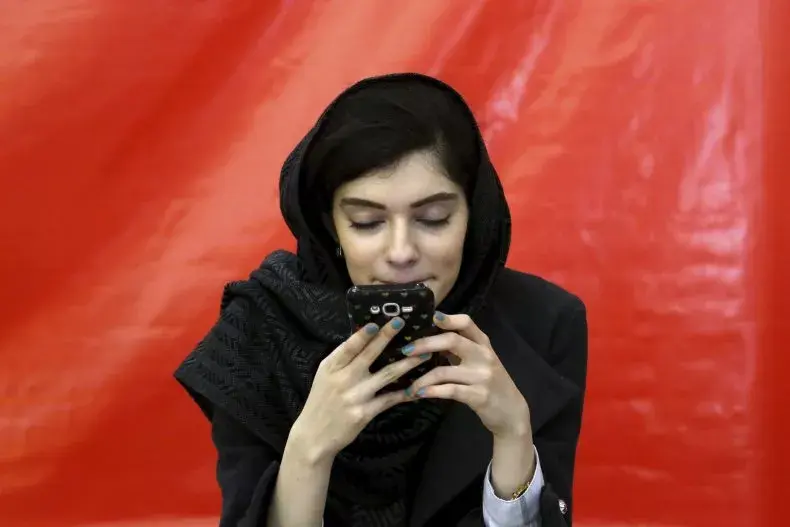
A cleric works on his cellphone next to a banner of Masoud Pezeshkian, the reformist candidate for Iran's presidential election, during his campaign rally in Tehran, Iran, on July 3, 2024. Vahid Salemi/AP Photo
Demands and Grievances
Negar Mortazavi, a senior fellow at the Center for International Policy and the host of The Iran Podcast, told Newsweek, "One of the main demands and grievances of the young generation in Iran is better internet access and better internet speeds and less filtering and just overall better connectivity—and this was one of the main promises of the Pezeshkian government when he ran for president."
Crackdowns and Internet Blackouts
The proposal came days after a ceasefire ended a conflict between Iran and Israel. During the June war, the government imposed widespread internet blackouts, citing national security. More than 2,000 people were arrested during and after the fighting, many accused of spreading false information online—conditions that critics said the bill would codify into law.

A general view of the Iranian parliament during the debate on President Masoud Pezeshkian's proposed ministers in Tehran, Iran, on August 21, 2024. Vahid Salemi/AP Photo
What People Are Saying
Fatemeh Mohajerani, a spokesperson for the Iranian government, said: "In line with national cohesion and on the president's directive, the cabinet today approved the withdrawal of the digital content bill."
Negar Mortazavi, a senior fellow at the Center for International Policy and the host of The Iran Podcast, told Newsweek: "I think there is the push and pull between the state hard-liners, and the population's demands with the administration kind of stuck in between—the administration wants to deliver to their base who voted for them, but they're also pressured by the hard-liners who want more restrictions on the internet and constantly try to limit overall connectivity."
What Happens Next
The bill's withdrawal may defuse short-term unrest, but pressure on Pezeshkian's government is likely to persist. Hard-liners continue to push for stricter digital controls, while reformist demands for openness grow louder.
Internationally, Iran's internet policies remain under scrutiny amid postwar tensions with Israel and ongoing friction with the U.S. over regional security and human rights. The administration faces mounting pressure on both domestic and geopolitical fronts.