
Democracy Dies with Dictatorship
Newsweek
May 5, 2025
Iran Unveils New Missile Capable of Striking US Targets
By Amir Daftari
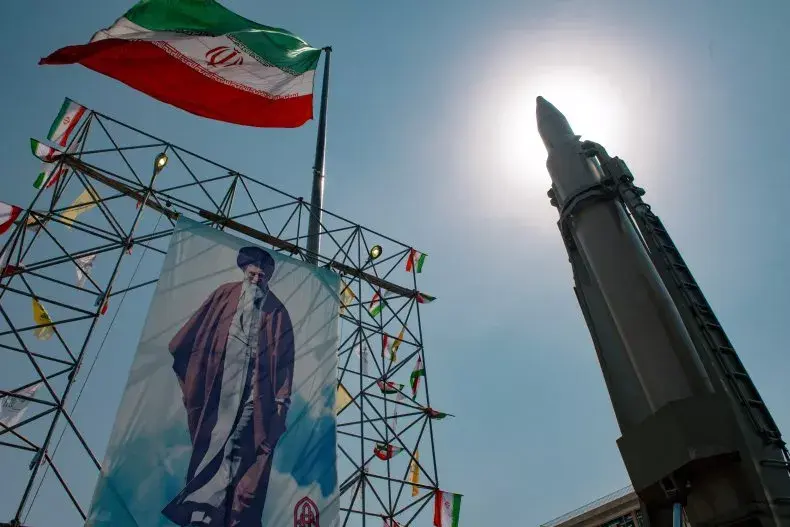
Video from Iranian state TV on Sunday showed Iran unveiling a new ballistic missile as tensions with the United States intensify over Tehran's nuclear program and regional military activities. The footage was aired during an interview with Defense Minister Aziz Nasirzadeh, who warned: "If war is initiated by the U.S. or Israel, Iran will strike their interests, bases and forces wherever they are and whenever necessary."
The announcement followed a recent missile strike by Yemen's Houthi rebels on Israeli territory, prompting Israel to vow retaliation against Iranian-backed groups. It also coincided with the suspension of U.S.-Iran nuclear talks.
Newsweek has reached out to the State Department as well as the foreign ministries of Iran and Israel for comment.
Why It Matters
The timing of Iran's missile reveal highlights Tehran's strategy of military signaling in response to growing international pressure. As U.S. President Donald Trump continues to threaten strikes unless a new nuclear deal is reached, Iran is reinforcing its regional posture through advanced missile development. With diplomatic channels faltering, these actions raise the specter of broader conflict.
What to Know
The missile, called "Qassem Basir," is solid-fueled and was most recently tested on April 17, according to state media. Nasirzadeh said it includes enhancements in maneuverability and guidance systems, allowing it to evade defenses. Iranian outlets claimed it has a range of 1,200 kilometers and can strike targets with pinpoint accuracy without using GPS.
Tehran developed its ballistic program in response to Iraqi Scud attacks during the Iran-Iraq War and as a result of long-standing arms embargoes that have limited access to modern defense technology.
Houthi Strike on Israel
The missile announcement came shortly after a Houthi-launched strike from Yemen landed near Israel's Ben Gurion Airport. Although the Houthis claimed responsibility, Israeli officials accused Iran of orchestrating the attack through its regional proxies. In a post on X, formerly Twitter, Israeli Prime Minister Benjamin Netanyahu vowed severe retaliation against both the Houthis and their Iranian backers.
Nasirzadeh rejected the accusations, insisting that Tehran does not control Houthi decisions. He warned, however, that any military action against Iran would prompt retaliatory strikes on U.S. and Israeli targets.
Diplomatic Efforts Falter
Planned nuclear talks set for May 3 in Rome were abruptly postponed, reportedly at the request of Oman's foreign minister, who is mediating the dialogue. Trump has renewed warnings of U.S. airstrikes on Iranian nuclear infrastructure if no deal is reached. Iran maintains that its nuclear program is for commercial purposes only.
What People Are Saying
Iranian Defense Minister Aziz Nasirzadeh said: "If war is initiated by the U.S. or Israel, Iran will strike their interests, bases and forces wherever they are and whenever necessary."
Israel Prime Minister Benjamin Netanyahu warned: "Israel will respond to the Houthi attack against our main airport AND, at a time and place of our choosing, to their Iranian terror masters."
What Happens Next
With diplomacy stalled and hard-line rhetoric rising on all sides, the risk of direct confrontation has sharply increased. As the U.S. and Israel signal readiness for military action and Iran doubles down on its deterrence posture, the absence of dialogue leaves the potential for a broader, potentially disastrous conflict.