
Democracy Dies with Dictatorship

NY Times
Mar 28, 2026
Iran War Live Updates: Iran-Backed Houthis Enter War With Missile Attack on Israel
Earlier, U.S. officials said an Iranian strike at a military base in Saudi Arabia injured 12 U.S. troops, one of the most serious breaches of American defenses since the war began.
Pinned
Aaron BoxermanEric SchmittChris Cameron and John Yoon
Here’s the latest
The Houthis, an Iranian-backed militant group in Yemen, announced on Saturday that they had launched a ballistic missile attack on Israel, appearing to open another front in the spiraling war in the Middle East.
And American casualties continued to rise as the war neared its second month: An Iranian strike on a military base in Saudi Arabia injured 12 U.S. troops, two of them seriously, two U.S. officials said Friday. It was one of the most serious breaches of American defenses since the war began.
The attack, which involved missiles and drones, also significantly damaged at least two American KC-135 military refueling planes, said the officials, who were not authorized to speak publicly.
There were no reports of casualties in the Houthis’ attack on Israel. But the Houthis, who control much of Yemen, could further rattle global markets already strained by the Iranian blockade of the Strait of Hormuz. During the war in Gaza, the group disrupted international shipping by menacing passing vessels in the Red Sea.
Yahya Saree, a Houthi military spokesman, said that the attacks from Yemen would continue “until the aggression ends” — a reference to both the American-Israeli war with Iran and Israel’s campaign against Hezbollah, another Iran-backed group in Lebanon.
Much of the Middle East has been drawn into the fighting since it began on Feb. 28 with U.S.-Israeli strikes on Iran.
The Israeli military said Saturday that it had begun a new round of bombardment in the Iranian capital of Tehran. Israel also reported more waves of incoming Iranian missiles, which killed at least one person in Tel Aviv, according to Israel’s emergency service.
Elsewhere in the region on Saturday, drones struck Kuwait International Airport, damaging its radar, and the key port of Salalah in Oman. The United Arab Emirates said its forces were intercepting drones and missiles from Iran. Saudi Arabia’s defense ministry said its forces had intercepted drones and a missile, without saying where they had come from.
Secretary of State Marco Rubio insisted on Friday that the war would conclude within weeks, not months, and that the United States did not need ground troops to win it. He added that Iran had yet to respond formally to the Trump administration’s 15-point peace plan, which it sent to Iran via Pakistani mediators.
President Trump has said that talks with Iran were progressing well, while Iranian officials have described the recent contacts as minimal. Pakistan said it would host Egyptian, Turkish and Saudi officials on Monday to discuss the war. It did not say whether U.S. or Iranian officials would attend.
Mr. Trump had given an ultimatum to Iran, saying that unless its military fully reopens the Strait of Hormuz, its power plants — which provide energy for millions of Iranian civilians — would be bombed. About one-fifth of the world’s oil normally transits the strait.
Here’s what else we’re covering:
Strikes in Iran: The U.S.-Israeli coalition bombarded Iran’s industrial infrastructure on Friday, with attacks on two major steel production complexes that are vital to the country’s economy. American and Israeli officials have vowed to target the country’s military industrial base to prevent it from quickly rearming after the war. Israel’s military also said it had attacked nuclear sites in central Iran. Read more ›
Food supply: The effects of the war on fertilizer supplies are worsening by the day, and price increases for farmers are threatening to lead to food insecurity in some parts of the world. Read more ›
Death tolls: The Human Rights Activists News Agency has reported that more than 1,492 civilians have been killed in Iran, out of more than 3,300 total deaths. More than 1,110 people in Lebanon have been killed, the health ministry there said on Thursday. More than 50 people have been killed in Gulf countries, while in Israel at least 16 were killed in Iranian attacks, officials said. The American death toll stands at 13 service members.
March 28, 2026, 8:20 a.m. ET7 minutes ago
Reporting from Jerusalem
Two prominent Lebanese television journalists were killed in an Israeli airstrike in southern Lebanon on Saturday, their channels said in statements. They were Ali Choeib, who worked for Al-Manar, a channel owned by the Iran-backed militant group Hezbollah, and Fatima Ftouni, a reporter for Al-Mayadeen, another broadcaster whose editorial line is generally supportive of Hezbollah.
The Israeli military said Choeib was a member of Hezbollah’s military wing and had used his work for Al Manar to expose Israeli military positions. It did not immediately respond to requests for comment on Ftouni’s death or for evidence that Choieb was a combatant. Human rights groups say that supporting a militant group does not make someone a legitimate target under the laws of war unless they actively participate in hostilities.
March 28, 2026, 6:23 a.m. ET2 hours ago
Abdi Latif Dahir and Eve Sampson
Abdi Latif Dahir reported from Beirut, Lebanon.
Yemen’s Houthis fired a missile at Israel, appearing to enter the war.

The attack on Israel on Saturday morning by the Houthis, an Iranian-backed militia in Yemen, marked an escalation in the monthlong U.S.-Israeli conflict with Iran, bringing in a new actor who threatened to expand the war’s reach across the region.
The Israeli military said early on Saturday that its aerial defense systems had intercepted a missile fired from Yemen. No casualties were immediately reported after the attack.
There has long been concern that if the Houthis were to enter the war, the group could seek to disrupt global shipping through the Red Sea, which it has done previously by firing on passing ships.
The global economy is already reeling from Iran’s effective closure of the Strait of Hormuz, a crucial choke point for energy shipments in the Persian Gulf.
The Houthis said in a statement that the group had launched ballistic missiles targeting “sensitive” Israeli military sites, and that it was acting in tandem with Iran and Hezbollah, an Iranian-backed militant group based in Lebanon.
The statement said the attacks would continue “until the aggression on all resistance fronts stops.”
The Houthis are Shiite militants who have been engaged in a conflict with Yemen’s internationally-recognized government for nearly two decades. In 2014, they captured the capital, Sanaa, forcing the government to flee to the southern port city of Aden.
An alliance led by Saudi Arabia to remove the Houthis faltered and led to a devastating civil war that precipitated one of the world’s most severe humanitarian crises.
The attack on Saturday marks the latest escalation in a yearslong conflict between Israel and the Houthis.
In 2023, shortly after the onset of the Gaza war, the Houthis began launching drones and missiles at Israel and ships in the Red Sea. They described their actions as a campaign to force Israel to halt its bombardment of Gaza and to allow more aid into the enclave.
The attacks disrupted traffic through one of the world’s major maritime corridors, forcing shipping companies to reroute around the southern tip of Africa. This detour, which added thousands of miles and several days to transit times, significantly raised shipping costs and delays.
The United States responded with military action that included over 1,100 strikes on Houthi targets. Despite the campaign and a 2025 cease-fire agreement between the United States and the Houthis, some major shipping companies continued to avoid the routes as the militia kept up attacks in support of the Palestinian cause.
The Houthis consider themselves part of Iran’s “axis of resistance,” a loose network of groups that includes Hezbollah in Lebanon, Hamas in Gaza and Shiite militias in Iraq.
The axis has weakened in recent years, primarily because Israel has targeted its leaders with airstrikes, disrupted its operations and struck key infrastructure. But it continues to defend Iran’s interests and to counter its adversaries across the region.
March 28, 2026, 6:06 a.m. ET2 hours ago
Reporting from Jerusalem
The Israeli military just warned Lebanese in several towns near the southern city of Tyre to flee their homes or expect impending Israeli operations that could put them in danger. The threats are likely to intensify fears in Lebanon that Israeli forces -- which are currently invading southern Lebanon -- might advance toward the city. Israeli soldiers have been clashing with Hezbollah across southern Lebanon as part of Israel’s efforts to uproot the Iran-backed armed group.
March 28, 2026, 5:49 a.m. ET3 hours ago
Reporting from Haifa, Israel
Iran acknowledged attacking near Oman’s commercial port of Salalah after Oman said it had been targeted on Saturday. In a statement, an Iranian military spokesman said that Iranian forces had targeted an American “military support vessel” some distance from the port. Oman said two drones had struck the port, injuring a worker and damaging one of the cranes.
March 28, 2026, 5:35 a.m. ET3 hours ago
Reporting from Haifa, Israel
Iraq’s defense ministry said a drone had crashed into an oil field in Basra, in southern Iraq. The drone did not explode and caused no casualties or damage to the Majnoon oil field, according to the Iraqi authorities. Iran has repeatedly fired on oil and energy fields in its Persian Gulf neighbors in retaliation for the U.S.-Israeli campaign, while Israel has bombarded fuel depots and a gas field inside Iran.
March 28, 2026, 5:31 a.m. ET3 hours ago
Reporting from Beirut, Lebanon
President Volodymyr Zelensky of Ukraine said on Saturday that he had met with the President Mohamed bin Zayed Al Nahyan of the United Arab Emirates to discuss security and defense cooperation. He said they reviewed the security situation in the Emirates, focusing on Iranian strikes and the blockade of the Strait of Hormuz, which Iran has effectively shut down. Zelensky also highlighted that Ukrainian experts were assisting the U.A.E. in defending against aerial threats and safeguarding its airspace and infrastructure. Iranian missiles and drones have targeted a variety of facilities in the Emirates, including energy, aviation, military and civilian infrastructure since the war began on Feb. 28.
March 28, 2026, 4:56 a.m. ET4 hours ago
Reporting from Tyre, Lebanon
The thuds of artillery are echoing across the city of Tyre on Saturday, as fighting intensifies along Lebanon’s southern coast. My colleagues and I can see the white smoke from strikes rising above Bayada, a town just south of Tyre where there have been clashes between Hezbollah militants and Israeli forces over the past day. That has stoked fears among the residents we have spoken to that the fighting could soon reach Tyre.
March 28, 2026, 4:31 a.m. ET4 hours ago
Reporting from Haifa, Israel
Multiple drones struck Kuwait International Airport on Saturday, causing significant damage to its radar system, the country’s aviation authorities said. It did not say where the drones came from. There were no reported casualties.
March 28, 2026, 4:05 a.m. ET4 hours ago
Pakistan’s foreign ministry has announced that the country’s foreign minister and his counterparts from Saudi Arabia, Egypt and Turkey will meet in Islamabad, Pakistan’s capital, on Sunday and Monday to discuss “efforts to de-escalate tensions in the region.” The ministers will also meet with Prime Minister Shehbaz Sharif of Pakistan, who has been spearheading his country’s efforts to broker peace by relaying messages between the United States and Iran.
March 28, 2026, 3:44 a.m. ET5 hours ago
Reporting from Haifa, Israel
Two drones struck the port of Salalah in Oman on Saturday, causing limited damage and injuring a worker, the authorities in Oman said in a statement. They did not say where the drones came from. Salalah is an important port in the region, located on key international shipping routes.
March 28, 2026, 3:38 a.m. ET5 hours ago
Reporting from Jerusalem
There were no reports of casualties in Israel on Saturday after the first known Houthi attack since the war began four weeks ago. But the group, which controls much of Yemen, has the ability to further rattle global markets. During the war in Gaza, the Houthis disrupted international shipping by menacing passing vessels in the Red Sea near the Bab-el-Mandeb strait, prompting a bombing campaign by the United States and its allies.
March 28, 2026, 3:24 a.m. ET5 hours ago
Reporting from Jerusalem
The Houthis, the Yemeni armed group backed by Iran, said they launched a ballistic missile attack against Israel earlier on Saturday — the first such attack against Israel from Yemen since the beginning of the war. Yahya Saree, a Houthi military spokesman, said in a video statement that the group’s attacks would continue “until the aggression ends against all the fronts of the resistance.” That appears to refer to the Israeli-U.S. war with Iran and Israel’s campaign in Lebanon against Hezbollah, another Iran-backed militant group.
March 28, 2026, 2:52 a.m. ET6 hours ago
Pakistan’s foreign minister is expected to host a meeting in the next few days with his counterparts from Saudi Arabia, Egypt, and Turkey to discuss the war in the Middle East, according to Pakistan’s state broadcaster on Saturday. Pakistan has been touted as a venue for peace talks between the United States and Iran, though no concrete plan has emerged so far.
March 28, 2026, 1:02 a.m. ET7 hours ago
Reporting from Bangkok
Iran has permitted Thai oil tankers to pass through the Strait of Hormuz, Prime minister Anutin Charnvirakul of Thailand told reporters on Saturday. Thailand, like many other countries in Southeast Asia, is heavily dependent on oil supplies through the strait.

March 28, 2026, 12:22 a.m. ET8 hours ago
Falling debris from a missile interception started two fires and injured five people in an industrial zone in Abu Dhabi on Saturday morning, the authorities in the United Arab Emirates said. Earlier, the country’s defense ministry said its forces were intercepting Iranian missiles and drones. Elsewhere in the region, Bahrain’s interior ministry said that there was a fire in a facility targeted by Iran. Saudi Arabia’s defense ministry said it had intercepted drones and a missile, without saying where they came from.
March 28, 2026, 12:12 a.m. ETMarch 28, 2026
Reporting from Rehovot, Israel
The Israeli military said it had detected the launch of a missile from Yemen toward Israel on Saturday. The military did not say who it suspected of launching the missile. The Iran-allied Houthi militia, which controls much of Yemen and has fired missiles at Israel in the past, had raised the possibility on Friday that it might enter the conflict.
March 27, 2026, 11:35 p.m. ETMarch 27, 2026
Rafael Grossi, the head of the International Atomic Energy Agency, repeated his call for restraint after the latest round of Israeli attacks on Iran’s nuclear facilities on Friday. The agency said it had been informed by Iran of strikes near the Bushehr nuclear power plant, on a heavy water plant and on a uranium production facility. No abnormal radiation releases or damage to the Bushehr were reported, but Grossi warned that there could be a “major radiological incident” if the reactor was damaged.

March 27, 2026, 10:51 p.m. ETMarch 27, 2026
The Israeli military said early Saturday that it had detected two sets of missile launches from Iran toward Israel, and reported one impact. There were no immediate reports of casualties. The Israeli military said separately that it was striking targets across Tehran, Iran’s capital. Fars, a semiofficial Iranian news agency affiliated with the country’s security forces, said there were explosions in several parts of Tehran in the early hours of Saturday.
March 27, 2026, 9:21 p.m. ETMarch 27, 2026
Chris Cameron and Eric Schmitt
Reporting from Washington
Strike on a U.S. base in Saudi Arabia injured 12 American troops, two of them seriously, officials said.

An Iranian strike injured 12 U.S. troops in Saudi Arabia, two of them seriously, in an attack on Prince Sultan Air Base in Saudi Arabia, two U.S. officials, who were not authorized to speak publicly, said on Friday.
The combined missile and drone attack amounted to one of the most serious breaches of American air defenses in the course of the monthlong war with Iran. At least two KC-135 aerial refueling planes also suffered significant damage in the attack.
The strike comes as President Trump has vacillated between promising peace and escalating strikes aimed at critical civilian infrastructure. The president has said that peace talks are underway, and going well — a claim that Iranian officials have disputed — even as more warships and thousands of troops have been deployed to reinforce U.S. forces in the region.
Iran has bombed U.S. bases across the Middle East over the course of the war, deploying a vast arsenal of ballistic missiles and drones in an effort to retaliate and disrupt the American bombing campaign. The barrage has severely damaged bases and forced U.S. Central Command to disperse thousands of troops to move them out of the line of fire — some to as far away as Europe.
Most Iranian strikes have been intercepted by U.S. and allied air defenses, but weapons like Iran’s Shahed drones are cheap and disposable, and many of the defensive systems used to intercept them are more sophisticated and harder to replace.
U.S. troops have also been injured, and some killed, in incidents where Iranian attacks have overwhelmed those defense networks. Six U.S. Army reservists were killed at the start of the war in an Iranian drone strike that destroyed an Army tactical operations center at Shuaiba port in Kuwait. Another American service member died after an attack at the Prince Sultan base on March 1.
Nearly 300 American troops have been injured since the start of the war, about 225 of whom suffered traumatic brain injuries from missile blasts, according to U.S. Central Command. All but about 35 service members have since returned to duty.
The vast majority of deaths and injuries reported so far have been in Iran, which has been under relentless attack by the U.S. and Israeli militaries, and Lebanon, which is being bombarded by Israel in response to rocket attacks by Hezbollah.
The Human Rights Activists News Agency has reported that more than 1,492 civilians have been killed in Iran, out of more than 3,300 total deaths. More than 1,110 people in Lebanon have been killed, the health ministry there said on Thursday. More than 50 people have been killed in Gulf countries and at least 16 in Iranian attacks on Israel, officials said. The American death toll stands at 13 service members.
Mr. Trump had vowed earlier this week to bomb power plants in Iran if Tehran did not quickly capitulate. He has extended that deadline twice, now giving Iran until the evening of April 6 to seal a deal.
March 27, 2026, 6:22 p.m. ETMarch 27, 2026
Farnaz Fassihi and Shirin Hakim
Expanding attacks on Iran’s industrial capacity include strikes on major steel plants.
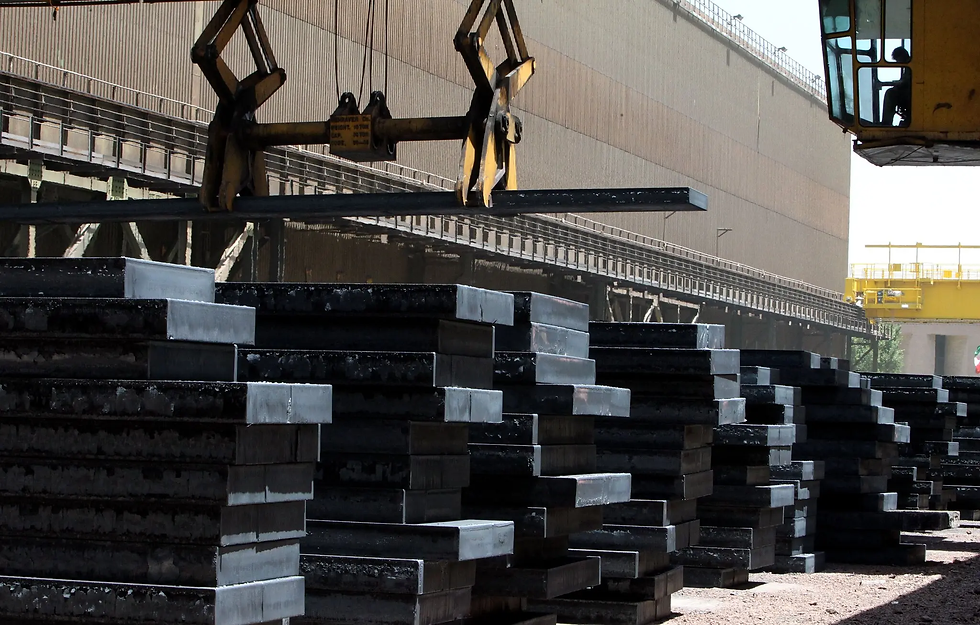
Amid the Israeli-U.S. bombing campaign against Iran, strikes on Iran’s industrial infrastructure widened on Friday, with attacks on two major steel production complexes that are vital to the country’s economy, along with other industrial sites.
Iranian officials attributed the strikes to Israel. The Israeli military acknowledged bombing two nuclear facilities, but did not explicitly address the other sites. Israel and the United States have bombed Iranian nuclear sites before, both in the current month-old war and in a 12-day conflict last June.
But the other strikes on Friday appear to reflect a shift in Israeli targeting toward degrading Iran’s civilian infrastructure and economy; Israel announced this week that it would intensify attacks on infrastructure.
The Israeli military has noted that the industries struck are often “dual use,” with both civilian and military applications, or have ties to the government and armed forces. Last week it struck the Pars gas field that supplies most of the country’s domestically used natural gas, and on Wednesday it hit two sprawling industrial complexes, Alborz and Leah, near the city of Qazvin.
President Trump has threatened to bomb Iran’s electric power plants if the Strait of Hormuz is not reopened to shipping, but so far he has refrained.
The targets on Friday included the steel complexes in Isfahan and Khuzestan, a mine that was part of a cement factory in Firouz Abad, an industrial city in Kheirabad and a warehouse at Mashhad’s airport, according to Iranian media reports and official comments. The state news agency reported that airstrikes on the mine killed two workers and injured two others; Jalil Hassani, deputy governor of Fars province, told state media that the cement factory was purely civilian.
The Islamic Revolutionary Guards Corps of Iran threatened in a statement to retaliate with strikes on industrial facilities in Arab countries of the Persian Gulf, particularly those with American shareholders.
The Iranian foreign minister, Abbas Araghchi, said on social media that Israeli attacks undermined President Trump’s statement that the United States would refrain from targeting Iranian infrastructure for 10 days to allow for diplomatic negotiations. “Iran will exact HEAVY price for Israeli crimes,” said Mr. Araghchi in his post.
Iran’s Atomic Energy Agency said in a statement that the attacks on the nuclear sites did not result in any radiation leaks or casualties.
But the attack on the Mobarakeh Steel Complex in Isfahan killed one person and injured 15, Mehdi Jamalinejad, the governor of Isfahan province, told Iranian media. He said two large electric power plants that supply the steel complex were also damaged.
A separate strike on the Khuzestan Steel Industries complex injured 16 workers, the deputy governor of Khuzestan province, Valiollah Heyati, told state television.
A senior Iranian official said the attacks on the steel mills delivered a major blow to the country’s economy, and would hamper recovery and reconstruction efforts once the war ends. The official, who spoke on condition of anonymity because he was not authorized to speak publicly, said the steel plants produced material needed for construction of buildings and roads.
It was not immediately clear whether the two steel factories, owned by a combination of private shareholders and government institutions, had contracts with Iran’s armed forces. Both companies are under U.S. sanctions; the U.S. Treasury contends that Mobarakeh is part of a network supporting the Basij paramilitary force.
A former engineer at Isfahan Mobarakeh Steel Complex who asked not to be named said in a text message that entering the site daily, even for employees, required extreme security clearance and any vendor or contractor entering the complex had to be vetted and given a special entrance permit.
A businessman in Ahvaz, who is a vendor for the Khuzestan steel plant and visits the site frequently, said in an interview that the attacks were extremely disconcerting for the business community and contractors who work with various sectors that could be deemed as dual use. He said Iran’s steel industry produced a wide range of products, including steel plates for ship building.
In addition to the attacks on industrial sites, the United States and Israel continue to strike such major cities as Tehran, Isfahan, Shiraz and Tabriz, according to interviews and comments on social media by residents of these cities.
“Last night the attacks were extremely huge, the ground was shaking beneath us as if we are in an earthquake for several hours,” said Susan, a 56-year-old resident of Tehran, in a telephone interview. Like most people interviewed she asked her last name not be used, out of fear of retribution.
March 27, 2026, 3:12 p.m. ETMarch 27, 2026
Catherine Porter and Lara Jakes
Catherine Porter reported from Paris and Lara Jakes from Rome.
Europe is making postwar plans to escort tankers through Strait of Hormuz, officials say.

As President Trump publicly laments Europe’s refusal to join the Iran war, European defense officials are privately in advanced and detailed discussions to help secure the waters off Iran’s coast once the war ends, according to two senior European officials briefed on the talks.
Threat of Iranian attacks has effectively shut down the Strait of Hormuz, the gateway to the Persian Gulf, through which about one-fifth of the world’s oil and natural gas are shipped. European leaders have said that they are willing to help protect that shipping once the war ends, but according to the officials, the plans are more advanced than has been publicly revealed. The officials spoke on the condition of anonymity to discuss sensitive diplomacy.
The plans under discussion include:
Sending frigates to escort oil tankers and other merchant ships through the strait;
Shooting down Iranian drones and missiles, if necessary, with air-defense batteries aboard those escorts;
Mounting a show of force, a visible demonstration of military power, to assure skittish shipping companies and their insurers that they will be protected when sailing through the gulf and the strait.
France said on Thursday that 35 countries were involved in discussions over a coordinated mission. Britain’s defense ministry said this week it was working with allies and the commercial shipping industry on “a viable plan to safeguard international shipping in the Strait of Hormuz.”
Britain and France are leading the effort, according to Mark Rutte, NATO’s secretary general. “Actively now, countries are working together,” Mr. Rutte said at the military alliance’s headquarters on Thursday. He said many details had not yet been decided, “given the fact that the war is ongoing.”
Mr. Rutte said the effort, which includes non-NATO countries like Japan, South Korea, New Zealand, Australia, Bahrain and the United Arab Emirates, was committed to “making sure that the sea lanes stay open.”
“And this is exactly also to the request of President Trump,” Mr. Rutte said.
So far, Mr. Trump has not sounded appeased. “NATO NATIONS HAVE DONE ABSOLUTELY NOTHING TO HELP WITH THE LUNATIC NATION, NOW MILITARILY DECIMATED, OF IRAN,” he wrote on social media on Thursday.
March 27, 2026, 3:02 p.m. ETMarch 27, 2026
Edward WongTheodore SchleiferTyler Pager and Ryan Mac
Edward Wong, Theodore Schleifer and Tyler Pager reported from Washington, and Ryan Mac reported from Los Angeles.
Trump and Modi had a call about the Iran war. Elon Musk joined them.

Elon Musk participated in a phone call on Tuesday with President Trump and Prime Minister Narendra Modi of India, an unusual appearance by a private citizen on a call between two heads of state during a wartime crisis.
The inclusion of Mr. Musk, confirmed by two U.S. officials, suggests that the world’s richest man is back on better terms with the president. The two men had a falling out last summer following the billionaire’s departure from the government, where he had been tasked with slashing the work force. They appear to have smoothed things over in recent months.
The U.S. officials asked for anonymity because they were not authorized to speak publicly.
It is unclear why Mr. Musk was on the call or whether he spoke. His companies have taken on significant investment from sovereign wealth funds in countries in the Middle East, including Saudi Arabia and Qatar. Mr. Musk has also long coveted a greater commercial presence in India. And SpaceX, his private rocket company, has been considering an initial public offering later this year, which could be thrown into turmoil if global economic conditions worsen.
The call, American and Indian officials have said, was about the escalating crisis in the Middle East, and in particular the Iranian military’s control of the Strait of Hormuz, which is critical for the shipping of oil and gas around the globe. The halt to most maritime traffic through the strait has led to surging energy prices worldwide and roiled markets. Some Asian nations are on the verge of having to ration fuel.
“Ensuring that the Strait of Hormuz remains open, secure and accessible is essential for the whole world. We agreed to stay in touch regarding efforts towards peace and stability,” Mr. Modi wrote on social media on Tuesday.
Neither government mentioned the inclusion of Mr. Musk in the official readouts or interviews.
While he helped elect Mr. Trump and played a significant role in cutting the federal bureaucracy last year, Mr. Musk does not have a government position. In the first months of the administration, he had the title of “special government employee” while overseeing a group known as DOGE that tried to make deep cuts to federal operations and spending, which led to tensions between Mr. Musk and other senior Trump aides.
Mr. Musk did not return multiple requests for comment this week. The White House declined to comment on Mr. Musk’s inclusion.
“President Trump has a great relationship with Prime Minister Modi, and this was a productive conversation,” said Karoline Leavitt, the White House press secretary.
It is relatively rare for the White House to include private citizens on calls between heads of state because sensitive matters involving national security are often discussed. As with many norms, Mr. Trump has chosen his own path on this matter: Jared Kushner, the president’s son-in-law, has no official U.S. government role and yet has been tasked with negotiations in the Middle East, where Mr. Kushner has business interests, and on Russia’s war in Ukraine.
On X, the social media platform he owns, Mr. Musk has been relatively quiet on the war in Iran. Last week, in response to a post that questioned why so many countries relied on the Strait of Hormuz as part of their global supply chains, the billionaire wrote: “We got lazy.” A few days later he shared a meme, suggesting that issues with the strait would slow growth in the artificial intelligence industry and hamper general economic advancement.
Mr. Musk has looked to India as a potentially lucrative market for his automotive, space and artificial intelligence companies. Tesla, his electric automaker, had previously faced hurdles to selling vehicles in India because of tariffs on foreign manufacturers. Starlink, the satellite internet provider from Mr. Musk’s SpaceX, is awaiting final clearances to operate in the country and is still “pending regulatory approval,” according to a company website.
In an interview with Indian television, Mr. Trump’s ambassador to the country, Sergio Gor, described the conversation between Mr. Trump and Mr. Modi as “a very friendly phone call between two world leaders.”
Mr. Gor, in his former position as a White House official, was a key player in the chain of events that led to Mr. Musk’s exit from the Trump administration last summer. Mr. Musk steamed about him to friends privately and publicly called Mr. Gor a “snake.”
At the start of this year, Mr. Musk posted a photo of him dining with Mr. Trump and Melania Trump, the first lady, on Jan. 3 at the Palm Beach club owned by the president, Mar-a-Lago, and said they had a “lovely dinner.” He wrote: “2026 is going to be amazing!”