
Democracy Dies with Dictatorship
NY Times
Apr 10, 2026
Iran War Live Updates: Israel Strikes Hezbollah as Lebanon Impasse Threatens Cease-Fire
Israel said it would continue striking the Iran-backed militia. Iran said it would not attend peace talks with the United States in Pakistan if the truce was not extended to Lebanon.
Updated
April 10, 2026, 6:42 a.m. ET44 minutes ago
Francesca RegaladoMichael CrowleyAnton Troianovski and Pranav Baskar
Here’s the latest
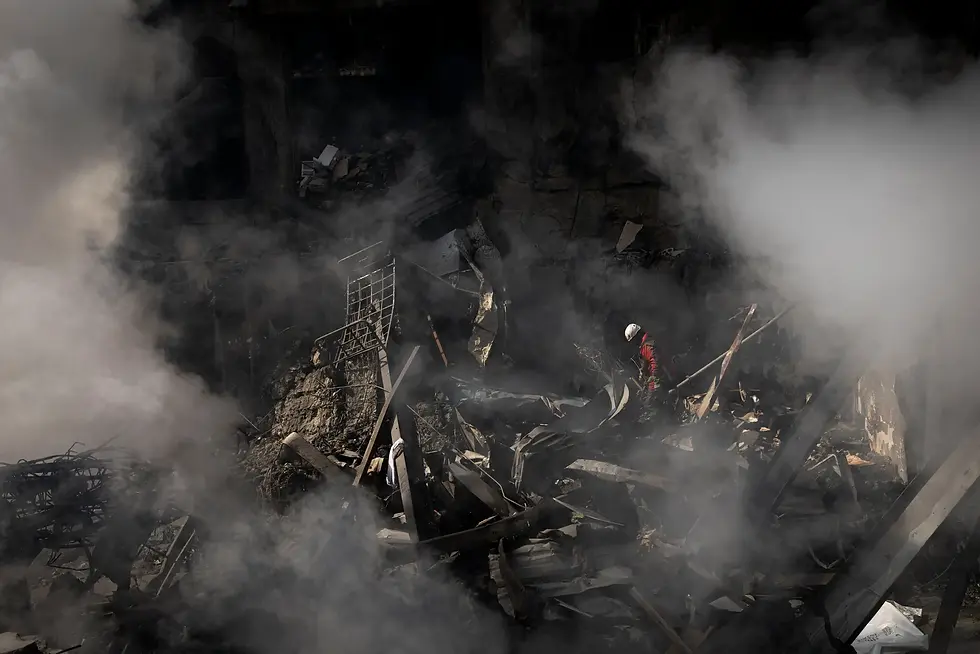
The Israeli military said early Friday that it was striking Hezbollah targets in Lebanon, the latest attacks in a campaign that is straining diplomacy three days into a shaky cease-fire between the United States and Iran.
The Israeli strikes against the Iran-backed militia have exposed divergences between Prime Minister Benjamin Netanyahu and President Trump, who appears eager to strike a deal with Iran to end the war. The Iranian foreign ministry spokesman, Esmail Baghaei, said delegates from the country would not attend peace talks in Pakistan scheduled to begin on Saturday if the cease-fire was not extended to Lebanon.
On Thursday, Mr. Trump said he had asked Mr. Netanyahu to scale back Israel’s operations in Lebanon. The Israeli leader later said his country would start talks with the Lebanese government to disarm Hezbollah. But, hours later, he vowed to continue strikes on the group.
“There is no cease-fire in Lebanon,” Mr. Netanyahu said.
Israeli airstrikes have killed hundreds of people in Lebanon since the cease-fire took effect, according to the Lebanese authorities. European leaders have urged Israel to stop the attacks, warning that they threaten to derail efforts to end the war. They have also demanded that Lebanon be included in the cease-fire.
But any talks between Israel and Lebanon would face enormous hurdles, in part because the Lebanese government has no direct control over Hezbollah, which has resisted disarming. Mr. Netanyahu said on Thursday that Israeli operations will not stop until Hezbollah is disarmed. A senior Hezbollah official dismissed the possibility of talks between Israel and Lebanon, saying that the Lebanese government did not speak for the group.
The uncertainty over Lebanon cast a shadow over preparations for U.S.-Iran talks that are scheduled to begin in Islamabad on Saturday. Vice President JD Vance is expected to arrive in the Pakistani capital on Friday to lead the U.S. delegation.
A key priority for Mr. Vance will be ensuring the full reopening of the Strait of Hormuz, a vital shipping passage for oil and gas that Iran has in effect blockaded since the war started. While the cease-fire announcement led to a drop in global oil prices, tankers have not restarted journeys through the strait over fears of attacks.
Saeed Khatibzadeh, Iran’s deputy foreign minister, said on Thursday that the strait was open to everyone but that ships must coordinate with the Iranian military because of “technical restrictions,” including mines.
Mr. Trump expressed displeasure with the situation in the strait in a social media post late Thursday.
“Iran is doing a very poor job, dishonorable some would say, of allowing Oil to go through the Strait of Hormuz,” he wrote. “That is not the agreement we have!”
Here’s what else we’re covering:
Global economic outlook: The International Monetary Fund will downgrade its global growth outlook because of the war, its managing director, Kristalina Georgieva, said on Thursday. Even under the most optimistic outcome, she said, where the temporary truce holds, there will be economic fallout because of “infrastructure damage, supply disruptions, losses of confidence, and other scarring effects.”
Death tolls: The Human Rights Activists News Agency said at least 1,701 civilians, including 254 children, had been killed in Iran as of Wednesday. Lebanon’s health ministry on Monday said that more than 1,500 people had been killed in the latest fighting between Israel and Hezbollah. In attacks blamed on Iran, at least 32 people have been killed in Gulf nations. In Israel, at least 20 people had been killed as of Monday. The American death toll stands at 13 service members.
Criticism of Trump: Prime Minister Keir Starmer of Britain directed criticism at Mr. Trump, saying in an interview with the ITN news agency that he was “fed up” with Trump and President Vladimir Putin of Russia for causing the price of energy to jump. The prime minister rarely criticizes Trump by name in public.
April 10, 2026, 6:44 a.m. ET43 minutes ago
Reporting from Islamabad, Pakistan
Islamabad, Pakistan’s quiet capital, steps into the diplomatic spotlight
Less than 24 hours before U.S. and Iranian officials are expected to meet here for high-level peace talks, Islamabad, Pakistan’s capital, is locked down.
The authorities have blocked roads with shipping containers and barbed wire, deployed security forces across the city, and sealed off a two-mile radius around the Serena Hotel, where parts of the delegations are scheduled to stay. Even the hiking trails on the lush hills overlooking the city have been closed to the public.
Pakistani officials declared Thursday and Friday as public holidays to prepare the capital, a quiet, green and residential city of just over a million residents in a country of 250 million people.
The Pakistani authorities have disclosed almost no details about the talks, including where they will be held, citing security concerns and the need to let Iranian and U.S. officials drive the negotiations.
Still, Pakistan’s government has welcomed its moment in the international diplomatic spotlight. World leaders in Europe and the Middle East have thanked Pakistan for its mediation efforts. Editorials in Pakistani newspapers have heralded a new era for the country as a regional power broker.
The Pakistani foreign minister, Ishaq Dar, even said that Iranian and U.S. journalists covering the talks could travel to Pakistan and obtain a visa on arrival — a highly unusual measure in a country where foreign reporters usually wait weeks or months before obtaining permission to enter.
Show less
April 10, 2026, 6:34 a.m. ET53 minutes ago
The price of oil is edging higher as traders remain wary of the durability of the U.S.-Iran cease-fire. Brent crude, the international benchmark, is up about 1 percent, to around $97 a barrel. That said, oil had been trading at around $110 a barrel earlier this week, before the cease-fire was announced.
But those widely cited prices are on futures contracts, for delivery in June. For buyers who need oil immediately, prices on what’s known as the “spot” market are much higher, recently hovering around $145 a barrel. That reflects the supply crunch stemming from disruptions to shipping in the Strait of Hormuz, which have not eased since the cease-fire.
April 10, 2026, 5:51 a.m. ET2 hours ago
Carlos Barragán
Reporting from Madrid
After NATO’s secretary general, Mark Rutte, hinted at possible NATO involvement in reopening the Strait of Hormuz, Spain’s foreign minister has pushed back on the idea. “NATO has no involvement in this war. The Middle East is not within NATO’s area of action,” the minister, José Manuel Albares, said on Friday, in remarks published by the Spanish news media.
April 10, 2026, 5:07 a.m. ET2 hours ago
Chief U.K. reporter
Prime Minister Keir Starmer of Britain directed criticism at President Trump, saying he was “fed up” with Trump and President Vladimir Putin of Russia for causing the price of energy to jump. “I’m fed up with the fact that families across the country see their bills go up and down on energy, businesses’ bills go up and down on energy, because of the actions of Putin or Trump across the world,” he said in an interview Thursday with the ITN news service. The comment was a rare eruption of frustration by the prime minister, who rarely criticizes Trump by name in public.
April 10, 2026, 3:27 a.m. ET4 hours ago
Reporting from Seoul
South Korea will send a special envoy to Iran to discuss the safe passage of ships through the Strait of Hormuz, the foreign ministry in Seoul said on Friday. The blockade of the strait has choked off around 70 percent of the country’s crude oil imports and stranded 26 South Korean ships.
April 10, 2026, 3:27 a.m. ET4 hours ago
Francesca Regalado and Constant Méheut
President Volodymyr Zelensky also said in his social media posts on Friday that Ukraine would receive assistance in various ways in exchange for providing defense expertise to Middle Eastern countries. These include crude oil and diesel supplies, interceptor missiles and financial arrangements, he said, without elaborating.
April 10, 2026, 3:26 a.m. ET4 hours ago
Francesca Regalado and Constant Méheut
Ukrainian military experts shot down Iranian drones over several countries in the Middle East during the war, President Volodymyr Zelensky of Ukraine said on social media on Friday. Ukraine sent military advisors, including drone warfare experts, to Persian Gulf countries to help improve their air defenses. This was the first public acknowledgement from Ukraine that its personnel were actively involved in shooting down drones from Iran.
April 10, 2026, 2:00 a.m. ET5 hours ago
Reporting from Islamabad, Pakistan
Islamabad, Pakistan’s capital, is on lockdown for the U.S.-Iran talks. The authorities have blocked roads with shipping containers and barbed wire, and deployed security forces across the city. The area in a two-mile radius around the Serena Hotel, which is expected to host the delegations, is sealed off. Even the hiking trails on the lush hills overlooking Islamabad have been closed to the public.
Pakistani officials have been tight-lipped about the talks, citing security concerns and the need to let Iranian and U.S. officials drive the negotiations. Less than 24 hours before the talks are expected to begin, we know very little about how they are going to unfold.
April 10, 2026, 12:00 a.m. ET7 hours ago
Reporting from Paris
With Iran setting the limits, the Strait of Hormuz remains thorny politically
For the last several weeks, sailing a ship through the Strait of Hormuz was perilous, given the risk of Iranian attacks, whether by missiles or mines. Now that the United States and Iran have put the war on pause, the voyage may be less dangerous. But it is no less challenging politically or diplomatically.
Two days into the fragile cease-fire, the strait has become Iran’s biggest chip in a high-stakes geopolitical contest with President Trump.
Rather than throwing open the waterway to oil tankers and container ships, as the Trump administration had promised, shipping analysts said Iran was keeping a chokehold on it. And Iran is giving priority to a trickle of vessels from countries that either trade directly with it or are not viewed as hostile to the Iranian government.
This has put the dozens of countries that use the strait in a devilish position, having to navigate between Iran and the United States like modern-day versions of Scylla and Charybdis, the monsters of Greek mythology who threatened mariners with destruction in the treacherous Strait of Messina.
“The Iranians are willing to negotiate with certain countries to secure voyages, but only on a case-by-case basis,” said Bridget Diakun, a senior risk and compliance analyst at Lloyd’s List Intelligence, a London-based maritime data and intelligence company. “The Trump administration is forcing its allies to negotiate with Iran because there is no other option.”
That could change, of course, if the United States applies enough pressure on Iran to ease passage in the strait. But for now, at least, the Iranians are still exploiting their ability to disrupt global trade and energy flows — based on their interests.
It was no coincidence, shipping analysts said, that the first Western European-owned vessel to transit the strait since Iran imposed restrictions belonged to a French shipping company, CMA CGM, and that its safe passage last week came the day after President Emmanuel Macron of France lashed out at Mr. Trump for his management of the war and for his frequent criticism of the NATO alliance.
“France has positioned itself as not aligned with the U.S. on the war, and so not hostile to Iran,” said Martin Kelly, the head of advisory at EOS Risk Group, a consulting firm. “It was probably a message to the rest of Europe.”
A spokeswoman for CMA CGM declined to comment on how it struck a deal with Iran. French officials said they were in touch with the company but have not said whether the government played a role in securing the ship’s passage.
Other countries that have won passage for ships, like Turkey, Pakistan and India, either trade with Iran or have taken a neutral position on the war. Pakistan brokered the negotiations that resulted in the cease-fire, and it will play host to Vice President JD Vance and an Iranian delegation in Islamabad on Saturday, where the two sides will try to work out a permanent settlement.
In the meantime, Iran is keeping a chokehold on the strait. On Wednesday, only five cargo ships passed through, none of which were carrying oil or gas. Iranian media said Iran halted tankers to protest Israel’s strikes on Hezbollah, the Iran-backed militant group, in Lebanon. Iran, Israel and the United States have argued over whether the cease-fire agreement includes Lebanon.
On Thursday, Iran’s deputy foreign minister, Saeed Khatibzadeh, said in an interview with ITV News that the strait was open to all but that there were still mines in the water and that ships wanting passage needed to coordinate with the Iranian military. That could further spook shipping companies, even if they doubted the veracity of Iran’s claims.
It also raised the pressure on them to use only a route that passes closer to Iranian territory, known as the Larak detour, which allows the Islamic Revolutionary Guards Corps to vet the ships and potentially collect fees for passage.
In its negotiation with the Trump administration, Iran wants to make that arrangement permanent. Iranian officials said they plan to charge ships $2 million per passage and use the money, after giving neighboring Oman a cut, to rebuild infrastructure destroyed by American and Israeli airstrikes.
Mr. Trump responded by floating the possibility that the United States would jointly control the strait with Iran and split the proceeds with it. The toll-collecting concept was quickly rejected by allies like Britain, whose foreign secretary, Yvette Cooper, said on Thursday, “freedom of navigation means navigation must be free.”
Those remarks could rankle Mr. Trump, who has already lashed out at Britain for its lack of support for the campaign. In fact, European countries are likely to have the thorniest challenge in navigating the politics of using the strait. Mr. Trump has castigated NATO allies more broadly for their unwillingness to forcibly reopen the strait, and said at various times that Iran’s control of the strait is a problem for Europe, not the United States.
European countries, which rely more heavily than the United States on oil and gas coming from the Persian Gulf, are assembling a 35-member coalition to do that, but only after the conflict is settled.
Saudi Arabia, Kuwait and Qatar are also likely to balk at a toll, given their deep reliance on oil and natural gas exports. But even if it is a far-fetched idea, analysts said it could give Iran leverage in talks with the United States that will cover other difficult issues, like its nuclear and ballistic missile programs.
While the world waits for a definitive end to the conflict, countries are likely to keep trying to cut their own deals with Iran.
Diplomats from Turkey, which had 15 ships and more than 150 sailors stranded by the war, have spoken with Iranian officials about securing safe passage for the trapped vessels. They drew on Turkey’s longstanding trade and diplomatic relations with Iran, which included President Recep Tayyip Erdogan’s efforts to prevent the war before the United States and Israel began bombing.
Turkey got three Turkish-owned vessels through before the cease-fire was announced, flying the flags of Panama, Belize and St. Kitts & Nevis. One, the Ocean Thunder, is carrying about one million barrels of crude oil from Iraq, which Iran said would be exempted from restrictions on transit.
“Turkey has taken a position of active neutrality,” said Ozgur Unluhisarcikli, the managing director of the Turkey office of the German Marshall Fund of the United States. “Turkey’s ability to have three of its ships pass through Hormuz is part of Iran’s appreciation,” he added. “It is basically signaling and telling others, ‘You, too, could have your ships passing if you show some effort.’”
Iran is also rewarding countries for doing business with it. India, which secured passage for eight Indian-flagged ships before the cease-fire was announced, confirmed that it had purchased its first shipment of oil from Iran in seven years. The United States temporarily lifted sanctions on Iranian oil to ease the supply shortages resulting from the closure of the strait.
Indian officials denied that Iran was receiving money in exchange for allowing Indian vessels to cross the strait. “Amid Middle East supply disruptions, Indian refiners have secured their crude oil requirements, including from Iran; and there is no payment hurdle for Iranian crude imports,” the oil ministry said on X.
Mr. Kelly of EOS Risk Group estimated there were nearly 1,000 ships waiting to enter or exit the Persian Gulf. At the current trickle, only a fraction of those will be allowed to transit before the expiration of the two-week cease-fire. And that will give Iran enormous clout in negotiating deals, he said.
“This is the most effective bargaining chip that Iran has got, and will always have,” Mr. Kelly said. “This is going to have a huge impact on global trade and the global economy.”
Ben Hubbard contributed reporting from Istanbul, Elian Peltier from Islamabad, Pakistan, and Pragati K.B. from New Delhi.