
Democracy Dies with Dictatorship
NY Times
Apr 18, 2026
Iran War Live Updates: Iran’s Military Says It Has Reimposed ‘Strict Control’ of Strait of Hormuz
The military said it would keep the vital waterway under its control until the U.S. ended its blockade of Iranian ports. The statement added to the uncertainty over access to the strait.
Updated
April 18, 2026, 8:13 a.m. ET18 minutes ago
Aaron BoxermanJohn YoonAshley AhnPranav Baskar and Rawan Sheikh Ahmad
Here’s the latest
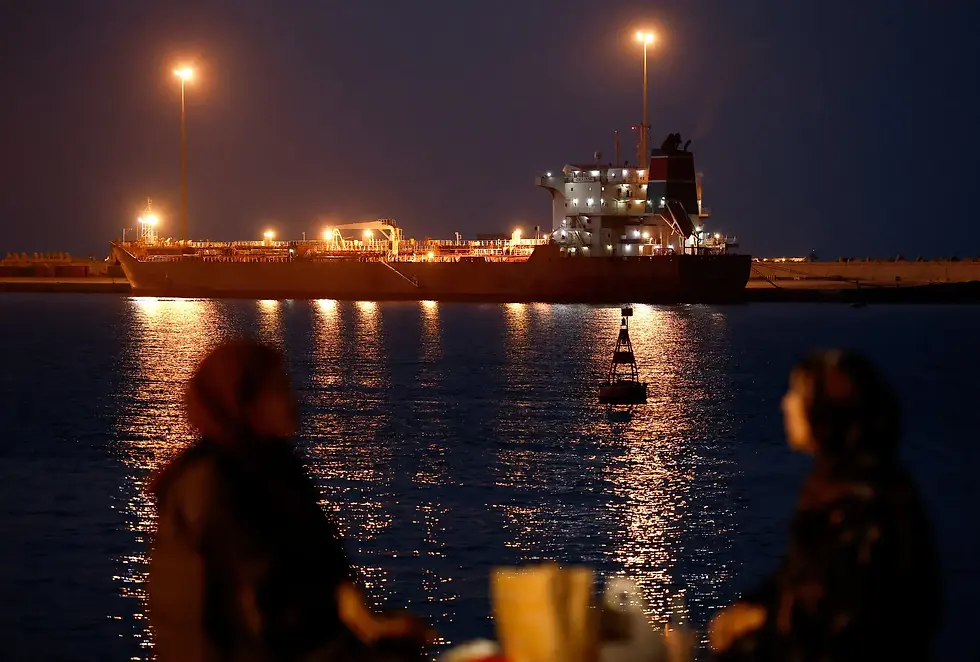
Iran tightened its grip on the Strait of Hormuz again on Saturday, asserting that it was “under strict control” by Iranian forces — just hours after Iranian officials and President Trump had raised hopes for an end to the war by announcing that the waterway had reopened.
Iran’s military said in a statement that the strait had now “returned to its previous state” unless the United States ended its own blockade of Iranian ports. A shipping monitor run by the British navy said Saturday that it had received a report of Iran’s Revolutionary Guards firing at a tanker in the strait.
The new developments added to the confusion on Saturday over the status of transit through the strait, where Iran has choked global energy supplies by menacing passing ships during more than a month of war with the United States and Israel.
Just a day earlier, Iran’s foreign minister called the strait “completely open,” leading Mr. Trump to declare a major breakthrough in the negotiations between the two countries on a permanent cease-fire.
Both countries immediately cooled that optimism, however. Iranian officials insisted ships still needed Iranian permission to cross. And Mr. Trump said the American naval blockade of Iran’s ports would continue until a deal was reached to end the war, prompting Iranian ire and vows to retaliate.
The president has often made overly optimistic claims about the war, which began in late February. Although Mr. Trump expressed confidence late Friday about the negotiations with Iran that he said would be happening over the weekend, no new face-to-face talks were announced as of Saturday morning.
Mr. Trump also claimed in a phone interview with CBS that Iran had “agreed to everything.” But Iran’s top negotiator, Mohammad Bagher Ghalibaf, quickly denied Iran had agreed to any of their adversaries’ core demands.
The announcement of the strait’s reopening brought immediate relief to energy markets on Friday, sending international oil prices tumbling to around $90 a barrel.
Hopes for an end to the war were boosted by the 10-day cease-fire in Lebanon that went into effect on Friday. The deal prompted celebrations in Lebanon as thousands of displaced families made their way home, and there was heavy traffic again Saturday morning as people continued to head south.
Iran had demanded the truce with the United States extend to Lebanon as a condition for a broader deal. Mr. Trump and U.S. officials worked to make that happen, even as they denied they were trying to meet Iran’s conditions.
Here’s what else we are covering:
Iranian threat: The Islamic Revolutionary Guards Corps’ small and fast boats have been the main threat stymying shipping through the Strait of Hormuz. Read more ›
Energy crisis: Even if the Strait of Hormuz opened fully, it would take weeks for substantial amounts of Persian Gulf oil and gas to reach buyers — and much longer before damage to energy infrastructure was repaired — meaning that high gas prices and shortages of products like jet fuel could persist. Read more ›
April 18, 2026, 7:41 a.m. ET51 minutes ago
The United Kingdom Maritime Trade Operations organization, which is administered by the British Navy, said on Saturday that it had received a report that Iran’s Revolutionary Guards Corps ships had fired at a tanker in the Strait of Hormuz. The ship’s captain reported that the crew was safe, the maritime organization said. TankerTrackers.Com, a company that tracks global oil shipments, said that the Guards had forced two vessels sailing through the strait to turn back.
April 18, 2026, 7:37 a.m. ET56 minutes ago
More than a day into the cease-fire in Lebanon, the Israeli military said it has continued to fire on militants who approached Israeli military lines, saying they are in violation of the truce. Israel has also continued carrying out artillery fire and demolitions, the military said. There was no immediate comment from Hezbollah, the Iran-backed group that Israel had been fighting. Israel Katz, the Israeli defense minister, has vowed to level swaths of southern Lebanon as part of maintaining an indefinite Israeli occupation there.
On Friday, Katz said that Israel would continue to “clear out” the area during the cease-fire, including by destroying buildings in villages close to the border with Israel.
April 18, 2026, 6:20 a.m. ET2 hours ago
Sarah Chaayto
Reporting from Sidon, Lebanon
People continued to travel back to southern Lebanon in large numbers on Saturday, more than a day after a cease-fire paused Israeli airstrikes against Hezbollah and enabled residents to take stock of the scale of destruction of their homes and villages. Traffic headed south near Sidon, a city south of Beirut, was heavy.
April 18, 2026, 5:47 a.m. ET3 hours ago
Leily Nikounazar
In Iran, six airports have reopened, and airlines are preparing to operate domestic and international flights, an executive from Iran’s aviation sector told an Iranian news outlet on Saturday. Iran shut down its airspace after U.S.-Israeli airstrikes began on Feb. 28.
The reopened airports include the two main ones in the capital, Tehran, and airports in the cities of Mashhad, Birjand, Gorgan and Zahedan, all in the east of the country, said Maqsoud Asadi-Samani, secretary of the Association of Iranian Airlines, in comments reported by the semiofficial Tasnim news agency.
Earlier on Saturday, the country’s Civil Aviation Organization said that part of Iran’s airspace and some of its airports had reopened.
April 18, 2026, 5:44 a.m. ET3 hours ago
Reopening the Strait of Hormuz would ease the oil crisis but only so much
Shipping companies are facing confusion and uncertainty about the status of the Strait of Hormuz, the narrow passageway through which a significant share of the world’s energy flows, as they assess mixed messages from officials in Iran and the United States.
But even if the strait opens fully — on Saturday, Iran’s military said it would reimpose “strict” control over traffic — it will take weeks for substantial amounts of Persian Gulf oil and gas to reach buyers around the world.
And it will be much longer before companies repair the damage that has been inflicted on one of the world’s most important energy-producing regions.
It is likely to be a long time before a gallon of gasoline costs less than $3 a gallon, as it did before the United States and Israel attacked Iran on Feb. 28. Shortages of certain products like jet fuel and natural gas may also persist in some countries for weeks or longer.
“We don’t expect oil prices — and therefore pump prices — to go back to prewar levels,” said Arjun Murti, a partner at Veriten, an energy research and investment firm based in Houston.
Think of the Strait of Hormuz, which sits between Iran and the Arabian Peninsula, as a valve. It must be open for energy to flow. But whether shipping companies reposition tankers and producers turn wells back on will depend heavily on whether they believe that the détente between Iran and the United States and Israel is durable.
Spencer Dale, who until recently served as the chief economist of the London-based oil company BP, said that producers who have been forced to turn off their oil and gas wells will be reluctant to restart them “until people have confidence that you have a lasting agreement.”
Traders were hopeful on Friday, when the most commonly cited international price of oil, Brent futures, fell 9 percent to about $90 a barrel, the lowest settlement price since the second week of the war.
But for those who needed an actual tanker full of oil, the price on Friday was higher: almost $99 a barrel, according to Argus Media. That second price, often called the spot price, more closely reflects what companies, such as refiners, pay for commodities — and therefore how much energy will cost the economy as a whole.
“Normally this distinction between the two markets is something for oil geeks and traders to worry about,” said Mr. Dale, now a visiting professor at the London School of Economics and Political Science. “It really matters right now.”
How oil prices have diverged
Note: Data is as of Friday. Current prices are North Sea Dated crude oil. Futures prices are ICE Brent crude oil.
Source: Argus Media.
Rebecca F. Elliott/The New York Times
One of the biggest variables for oil prices will be whether shipping companies — and their insurers — believe that the strait is safe.
The status of the waterway remained murky on Saturday after Iran’s military said that the strait would remain “under strict control,” a day after the country’s foreign minister said that the strait was “completely open.” President Trump framed the foreign minister’s Friday announcement as a breakthrough but, complicating matters, he said that the United States would maintain its blockade on ships headed to or from Iranian ports. That has effectively prevented Iran from exporting energy in recent days.
Ships had not returned to the strait in great numbers as of Friday afternoon.
Should shipping from Iran’s neighbors restart, a first order of business will be for the tankers full of energy that have been stuck in the Persian Gulf to leave for countries in Asia and Europe that depend heavily on the region. Empty vessels would also have an opportunity to pick up fuel from storage tanks, making space for newly extracted oil and natural gas. All of that would give the global economy an infusion of energy that it badly needed.
But the war has inflicted the kind of damage that takes months, if not years, to repair. Not only have producers turned off an estimated 10 percent of global oil supply, but more than 80 energy facilities in the region have been damaged, many of them severely, according to the International Energy Agency. Restoring output to prewar levels could take up to two years, Fatih Birol, the agency’s executive director, said this week.
Peter Eavis contributed reporting.
Show less
April 18, 2026, 4:38 a.m. ET4 hours ago
Leily Nikounazar
Iran’s military said on Saturday that “control of the Strait of Hormuz has returned to its previous state” and that the waterway was “now under strict management and control of the armed forces.” The military statement, published by Iranian state television, said that the strait would remain “under strict control” unless the United States restored “full freedom of navigation for vessels traveling from Iran to destinations and from destinations to Iran,” referring to the American blockade of Iranian ports.
The statement added more confusion to the state of navigation through the strait, a day after President Trump and Iran’s foreign minister said it was open again.
April 18, 2026, 3:20 a.m. ET5 hours ago
Leily Nikounazar
Part of Iran’s airspace and some of its airports reopened on Saturday morning, the country’s Civil Aviation Organization announced. Iran had shut down its airspace after U.S.-Israeli airstrikes began on Feb. 28.
“Accordingly, air routes in the eastern sector of the country’s airspace are open for international flights transiting through Iran,” the organization said in a statement published by the state news agency. Flight operations would “gradually resume,” it added.
April 18, 2026, 3:05 a.m. ET6 hours ago
Top officials from Pakistan, a key mediator between the United States and Iran, went on several high-profile trips this week. Field Marshal Syed Asim Munir, the army chief, concluded a three-day visit to Iran, the Pakistani military said on Saturday. Munir’s meetings included talks with Mohammad Bagher Ghalibaf and Foreign Minister Abbas Araghchi, who are on the Iranian negotiating team.
Separately, Prime Minister Shehbaz Sharif and Foreign Minister Ishaq Dar were flying back to Pakistan after visiting Saudi Arabia, Qatar and Turkey for talks, Dar said on social media on Saturday.
April 18, 2026, 12:01 a.m. ETApril 18, 2026
Why Iran’s ‘mosquito fleet’ remains a potent threat in the Strait of Hormuz
Iranian warships sunk by U.S. and Israeli attacks litter naval harbors along the Persian Gulf coast, but what is sometimes called a “mosquito fleet” lurks in the shadows.
It is a flotilla of small, fast, agile boats designed to harass shipping, and it forms the heart of the naval forces deployed by the Islamic Revolutionary Guards Corps, a force separate from Iran’s regular navy.
These boats, and especially the missiles and drones that the Guards navy can launch from them, or from camouflaged sites onshore, have been the main threat stymying shipping through the Strait of Hormuz.
Iran had vowed to keep the strait closed until there was a cease-fire in Lebanon. On Friday, senior Iranian officials made conflicting statements about whether that truce had prompted Iran to open the strait. On Saturday, Iran’s military said the waterway had “returned to its previous state” and was “under strict management and control of the armed forces.”
Welcoming the initial Iranian announcement of the opening, President Trump pronounced the Hormuz situation “over,” while stressing on social media that the U.S. blockade of Iranian ports would remain in place until a peace deal was reached.
The task of keeping the strait closed would fall to the Guards navy.
“The I.R.G.C. navy works more like a guerrilla force at sea,” said Saeid Golkar, an expert on the Guards and a political science professor at the University of Tennessee at Chattanooga.
“It is focused on asymmetrical warfare, especially in the Persian Gulf and the Strait of Hormuz,” he added. “So instead of relying on big warships and classic naval battles, it depends on hit-and-run attacks.”
During the war, at least 20 vessels were attacked, according to the International Maritime Agency, a United Nations agency. The Guards navy rarely claimed the attacks, which analysts said were most likely carried out by drones fired from mobile launchers on land, which generate a faint footprint, difficult to trace.
On April 8, after a two-week cease-fire in the war was announced, Gen. Dan Caine, the chairman of the Joint Chiefs of Staff, said more than 90 percent of the regular navy’s fleet, including its main warships, sat at the bottom of the ocean.
An estimated half of the Guards navy’s fast attack boats were also sunk, General Caine said, but did not specify how many. Estimates of the overall number range from hundreds to thousands — it is difficult to count them.
The boats are often too small to appear on satellite images, and they are moored along piers within deep caves excavated along the rocky coastline, ready to be deployed in minutes, analysts said. Their arsenal poses a major threat to commercial ships in the gulf and the strait.
“It remains a disruptive force,” said Adm. Gary Roughead, a retired chief of U.S. Naval Operations. “You never quite knew what they were up to and what their intentions were.”
Stepping in where the regular navy couldn’t
The Guards land forces were formed soon after the 1979 Islamic Revolution because its leader, Ayatollah Ruhollah Khomeini, did not trust the regular army to protect the new government.
The Guards navy was added around 1986. The regular navy had proved reluctant during the Iran-Iraq war to attack oil tankers from Iraq’s financial backers, Kuwait and Saudi Arabia, said Farzin Nadimi, a specialist on the Guards navy at the Washington Institute, a policy think tank in the U.S. capital.
Eventually those attacks ratcheted up, and the United States then deployed warships to escort tankers. One of them, the U.S.S. Samuel B. Roberts, almost sank after hitting an Iranian mine. In a subsequent battle, the U.S. Navy scuppered two Iranian frigates and a number of other naval vessels.
Three years later, the Iranians watched as the United States laid waste to the Iraqi military during the first Persian Gulf war.
That combination of events convinced Iran that it could never prevail in a direct confrontation with the U.S. military, so it developed a stealth force to harass ships in the gulf, Mr. Nadimi said.
The Guards navy has an estimated 50,000 men, he said, and divides its forces into five sectors along the gulf, including some presence on many of the 38 gulf islands that Iran controls.
Overall, it has constructed at least 10 well-hidden, fortified bases for attack boats. One, Farur, is the center of operations for the naval special forces, whose equipment, even their sunglasses, are modeled on their U.S. counterparts.
“The I.R.G.C. navy has always believed that it is at the forefront of the confrontation with the Great Satan, and has been in constant friction with the Americans in the gulf,” Mr. Nadimi said.
An arsenal of small, nimble boats
Iran started by using recreational boats mounted with rocket-propelled grenades or machine guns, naval analysts said. Over the years, it built a range of specially designed small boats, as well as miniature submarines and marine drones. Those boats often reach speeds of more than 100 knots, or more than 115 miles per hour.
The Guards navy also recently developed larger, more sophisticated warships, many of which were targeted in the war, said Alex Pape, the chief maritime expert at Janes, a defense analysis firm. Those damaged included its largest drone carrier, the Shahid Bagheri, a converted container ship that could also launch anti-ship missiles.
To counter a potential swarm of smaller boats, U.S. warships have high-caliber cannons and other weaponry, experts said. Commercial vessels, though, have no way to fend off such attacks.
But the Iranians have never tested swarm attacks of small boats in combat, said Nicholas Carl, an Iran expert at the American Enterprise Institute, a think tank in Washington.
Since Mr. Trump on Monday imposed a naval blockade on ships traveling from Iranian ports, even the most powerful U.S. warships are avoiding spending any time patrolling in the vicinity of the narrow Strait of Hormuz. There is little room to maneuver and almost no warning time to ward off a drone or a missile fired from nearby, experts said.
The U.S. warships enforcing the blockade are likely to remain outside the strait, in the Gulf of Oman or even farther, in the Arabian Sea, where they can monitor shipping traffic but are far more difficult for the Guards to attack, experts said. On Wednesday, Iran warned that it could expand operations into the Red Sea, another key shipping route in the region, through its proxy force in Yemen.
A long history of confrontation
The Guards navy has long played games of cat-and-mouse with the U.S. military inside the gulf. Admiral Roughead remembers that in the 1990s and 2000s, the small attack craft would approach American warships at high speeds and then veer off when they were half a mile away.
Drone warfare has amplified the danger level, he said. Drones are cheap and sometimes hard to detect, but they can inflict significant damage on a warship costing billions of dollars.
Occasionally the Guards navy has fought directly with American or other forces. In early 2016, it captured two small U.S. naval boats. The 10 sailors, filmed on their knees, were later released unharmed. The episode caused an uproar in the United States.
Brig. Gen. Mohammad Nazeri, a founder of the Guards naval special forces, who led that attack, achieved cultlike status in Iran. He inspired a reality show on state television, “The Commander,” which ran for five seasons.
Each season, about 30 contestants competed for the chance to become a naval commando. They demonstrated their survival skills or feats of daring like jumping off cliffs into the gulf. After each round, viewers voted for their favorite “hero.”