
Democracy Dies with Dictatorship
CNN
May 10, 2026
Iran warns countries enforcing sanctions will ‘face problems’ in Strait of Hormuz
A bulk carrier was reportedly struck by an unknown projectile off Qatar, days after US and Iran exchanged fire around the strait.
Here's the latest
• Strait of Hormuz: An Iranian military official has said countries enforcing sanctions against Iran will “face problems” when their vessels use the Strait of Hormuz. Tehran earlier said it would launch a “heavy assault” on US assets in the Middle East if its ships face further attacks during the ceasefire.
• Ships attacked: A bulk carrier was reportedly struck by an unknown projectile in the Persian Gulf off Qatar, according to a UK maritime agency. Meanwhile, satellite imagery of an Iranian-flagged ship hit by a US jet fighter showed smoke still billowing from the vessel a day after the attack.
• In Lebanon: At least 22 people, including four children, were killed in Israeli attacks in Lebanon on Saturday, state-run media reported, citing the Lebanese health ministry. The Israeli military said it killed 10 Hezbollah members and struck the group’s infrastructure sites in southern Lebanon.
Iran's warns ships using Strait of Hormuz, as Rubio meets with Qatar's prime minister
By Luke Jacobs
A senior Iranian military figure has warned countries enforcing sanctions on Iran that they will “face problems” when their vessels pass through the Strait of Hormuz, state media reported.
If you’re just joining us, here are some of the other latest developments from around the region:
Iran’s Supreme Leader, Mojtaba Khamenei, has met with a senior military commander. It is the second in-person meeting he has had within the last few days, according to Iranian state media.
Qatar’s Prime Minister told US Secretary of State Marco Rubio at a meeting in Miami on Saturday that the roots of the crisis in the Gulf had to be tackled “through peaceful means and dialogue.”
Elsewhere, a bulk carrier in the Persian Gulf reported being struck by an unknown projectile on Sunday morning local time, according to the UK Maritime Trade Operations Center (UKMTO) said.
In Lebanon, Israeli attacks killed at least 22 people on Saturday, according to the state-run National News Agency (NNA). The Israeli military said it killed 10 members of the Iranian-backed Hezbollah and struck 40 of the group’s infrastructure sites in southern Lebanon
Satellite imagery of one of two Iranian-flagged tankers attacked by a US fighter jet taken on Saturday showed smoke still billowing from the vessel. They were the second and third Iranian ships hit by a US F/A-18 in recent days.
And a number of “hostile drones” crossed into Kuwaiti airspace early today, according to the Kuwaiti Defense Ministry, before being “dealt with in accordance with approved procedures,” the government added.
CNN’s Kareem El Damanhoury, Tim Lister, Chris Lau and Yong Xiong contributed to this post.
Iran's Supreme Leader reported to have met military commander
By Tim Lister, Aida Karimi
Iran’s Supreme Leader, Mojtaba Khamenei, has met with a senior military commander – the second in-person meeting Khamenei has had within the last few days, according to Iranian state media.
Khamenei met with Maj. Gen. Abdollahi, the commander of military headquarters, according to the semi-official Fars news agency, and received a report “on the readiness of Iran’s armed forces.”
No photographs or video of the meeting were published. No images of Khamenei have been published by Iranian media since he was inaugurated in March after US-Israeli strikes killed his father and predecessor, Ayatollah Ali Khamenei, leading to speculation about his health and whereabouts.
Abdollahi said that Iranian forces were in a state of high readiness, with “the necessary equipment and weapons to counter hostile actions by the American-Zionist enemies.”
“In the event of any strategic mistake, aggression, or attack by them, they will respond swiftly, intensely, and powerfully,” Abdollahi was quoted as saying.
Khamenei said that Iran had “thwarted the enemies from achieving their evil goals” and issued new instructions to powerfully confront the enemies, according to the Fars account.
Iran’s president, Masoud Pezeshkian, said on Thursday he had held a two-and-a-half-hour meeting with Khamenei, marking the first reported in-person meeting between a top Iranian official and the country’s new Supreme Leader.
Pezeshkian did not specify when it took place.
CNN reported Friday that US intelligence assesses Khamenei is playing a critical role in shaping war strategy alongside senior Iranian officials, citing multiple sources familiar with the intelligence.
The reports found that precise authority within a now-fractured regime remains unclear, but that Mojtaba Khamenei is likely helping direct how Iran is managing negotiations with the US to end the war.
Kuwait says hostile drones "dealt with" Sunday
By Ibrahim Dahman, Tim Lister
A number of “hostile drones” crossed into Kuwaiti airspace early Sunday, according to the Kuwaiti Defense Ministry.
The drones were “dealt with in accordance with approved procedures,” a government statement said.
The origin of the drones is not known.
Last month, the Kuwaiti military said that two drones coming from the direction of neighboring Iraq struck border posts on its northern frontier with the country, causing damage but no casualties.
Iranian-backed militia in Iraq have claimed more than 750 strikes on US targets in Iraq and the Gulf region.
Before the ceasefire took effect on April 8, Kuwait said that over 1,000 missiles and drones had been fired toward Kuwaiti territory, the vast majority apparently from Iran. According to a ministry statement, the tally included 336 ballistic missiles, 13 cruise missiles, and 740 drones.
How important is the Strait of Hormuz?
By Hanna Ziady
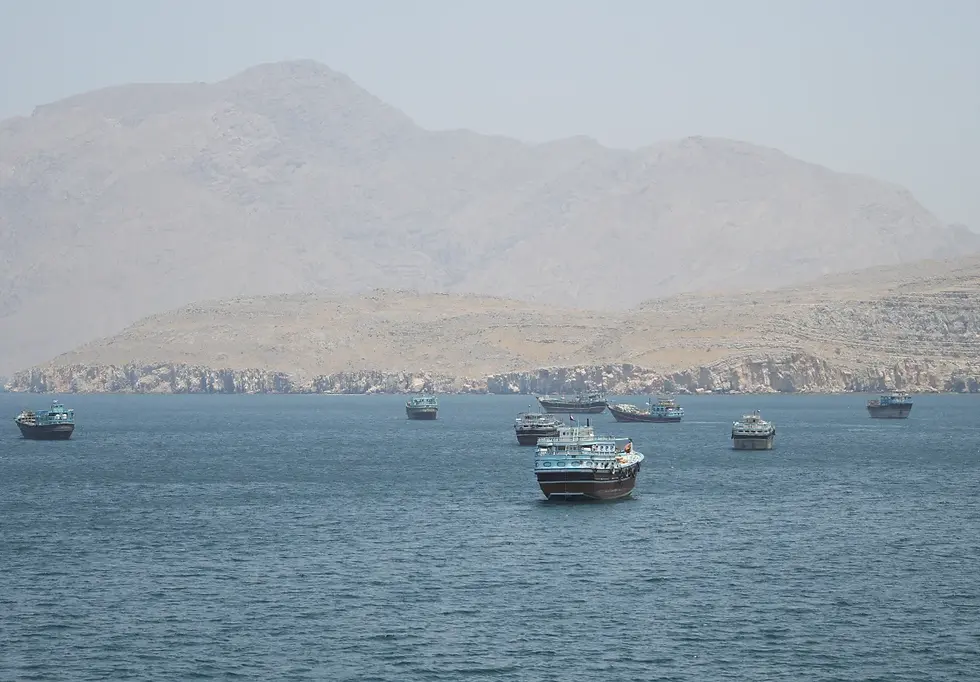
A narrow waterway that bypasses Iran and Oman, the Strait of Hormuz is the main route for shipping crude from oil-rich countries such as Saudi Arabia and Kuwait to the rest of the world.
The strait has remained a crucial factor since the start of the conflict after it was effectively closed by Tehran. In recent days, it has seen just a handful of crossings, according to Kpler and other shipping data sources.
This video shows a timelapse of marine traffic in the Strait of Hormuz from May 3 to May 4. Marine Traffic
Iran controls the strait’s northern side. About 20 million barrels of oil, or about one-fifth of daily global production, used to flow through the strait every day, according to the US Energy Information Administration, which calls the channel a “critical oil chokepoint.”
According to the EIA, “very few alternative options exist to move oil out of the strait if it is closed.”
The strait also carries about one-fifth of global trade in liquefied natural gas.
Qatar urges resolution of Gulf crisis through dialogue
By Tim Lister, Zachary B Cohen and Jennifer Hansler
Qatar’s Prime Minister told US Secretary of State Marco Rubio at a meeting on Saturday that the roots of the crisis in the Gulf had to be tackled “through peaceful means and dialogue,” according to a Qatari statement Sunday.
Rubio and US special envoy Steve Witkoff met with Qatari Prime Minister Sheikh Mohammed bin Abdulrahman Al-Thani on Saturday in Miami.
Qatar said the two sides discussed Pakistani mediation “aimed at de-escalation to contribute to strengthening security and stability in the region.”
The United States is awaiting a response from Tehran to its latest proposal for ending the conflict.
“The Secretary expressed appreciation for Qatar’s partnership on a range of issues,” the US State Department said. “The Secretary and the Foreign Minister also discussed U.S. support for Qatar’s defense, and the importance of continued close coordination to deter threats and promote stability and security across the Middle East.”
First Qatari tanker crosses Hormuz since conflict began
By Tim Lister
A Qatari tanker loaded with liquid natural gas has crossed the Strait of Hormuz on its way to Pakistan, according to ship tracking data.
The ship - Al Kharaitiyat – is the first Qatari owned and operated tanker to have crossed the strait since the conflict between Iran and the United States began at the end of February, according to shipping analysts.
At 4 a.m. ET Sunday it was in the Gulf of Oman.
The vessel’s track shows that it transited Hormuz using the Iran-approved northern route near Qeshm island, according to the MarineTraffic tracking site.
“The passage of this Qatari oil tanker indicates that Iran’s sovereignty over the Strait of Hormuz continues,” the semi-official Iranian news agency Tasnim reported Sunday.
Al Kharaitiyat, which can carry more than 200,000 cubic meters of liquid gas, loaded at Qatar’s Ras Laffan export hub earlier this month.
Qatar normally supplies nearly 20% of the world’s LNG, but its production has been shut in and its main facility damaged during the conflict.
Countries enforcing sanctions on Iran will "face problems" in Hormuz, spokesperson says
By Chris Lau
A senior Iranian military figure has warned countries enforcing sanctions on Iran that they will “face problems” when their vessels pass through the Strait of Hormuz, state media reported Sunday.
“From now on, countries that follow the United States in enforcing sanctions against the Islamic Republic of Iran will certainly face problems passing through the Strait of Hormuz,” said Brigadier General Amir Akraminia, the Army’s spokesperson.
The US has imposed a wide range of sanctions against Iran for decades, placing a stranglehold on its economy. A host of other countries, including the European Union bloc, Britain and Australia, have followed suit, voicing concerns around Tehran’s weapons programs, human rights record and the funding of militant groups.
Earlier in the war, Tehran had threatened vessels linked to nations who provided support for the US and Israeli military attacks on Iran.
A number of nations have been also discussing a joint effort to protect shipping in the critical waterway for global trade that Iran has had a chokehold on since the war began. The UK said yesterday it would deploy a warship to the Middle East ahead of a potential mission to protect shipping in the Strait of Hormuz.
What to know about the Iranian hardliners bent on sabotaging a deal with the US
As negotiations between the United States and Iran enter a critical stage, a small but influential hardline faction has intensified efforts to sabotage a potential deal with Washington, fuelling President Donald Trump’s claims of divisions within the Islamic Republic.
The group shares Trump’s view that the 2015 nuclear deal between Iran and world powers was a mistake – but for different reasons. Its positions are so hostile to the West, even by the standards of Iran’s conservative hardliners, that the regime’s efforts to appease it have so far failed.
And as the Islamic Republic’s new leaders project unity in the face of the gravest existential threat the regime has faced, the ultra-hardline group has ramped up efforts across the media, in parliament and on the streets to advocate against an agreement with the US, arguing that only by defeating Washington can Iran secure a favorable deal.
Known as “Jebhe-ye Paydari” – or the Endurance Front – its members are often described by observers as “Super Revolutionaries” who view themselves as guardians of the values of the 1979 revolution that overthrew the pro-Western Shah before imposing an authoritarian regime rooted in Shia Islamist ideology.
“They view resistance against the United States and Israel as an eternal fight,” Hamidreza Azizi, a visiting fellow at the German Institute for International and Security Affairs, told CNN. “They believe in a Shia state that needs to continue until the end of times and are quite fanatic when it comes to that religious ideology.”