
Democracy Dies with Dictatorship
Newsweek
Dec 5, 2025
Iran Warns US To Stay Away From Naval War Drills
By Amir Daftari
The naval arm of Iran's Islamic Revolutionary Guard Corps (IRGC) has issued a direct warning to U.S. warships in its southern waters, telling them to keep away from its ongoing military exercises.
The alert comes as Tehran launches a large-scale drill across the Persian Gulf, Strait of Hormuz and Sea of Oman that's designed to showcase its defensive readiness and deterrent capabilities. Officials say the warning is meant to prevent any "provocations or threats" to Iran's territorial waters.
Newsweek has contacted the State Department and Iran's Foreign Ministry for comment.
Why It Matters
The warning comes after a turbulent 12-day war in June between Israel and Iran, during which the U.S. conducted strikes on Iranian nuclear facilities. Tehran condemned the attacks as a serious violation of its sovereignty, adding to mounting tensions over stalled nuclear deal negotiations, continued U.S. military presence in the region and repeated confrontations in the Persian Gulf.
The IRGC's naval drill and its explicit warning to American warships signal that Iran is prepared to defend its waters and assert control over strategic maritime corridors, a situation with global implications as the Persian Gulf and Strait of Hormuz are critical arteries for about a fifth of the world's oil supply, meaning any escalation could disrupt energy markets and heighten geopolitical instability across Europe, Asia and beyond.
What To Know
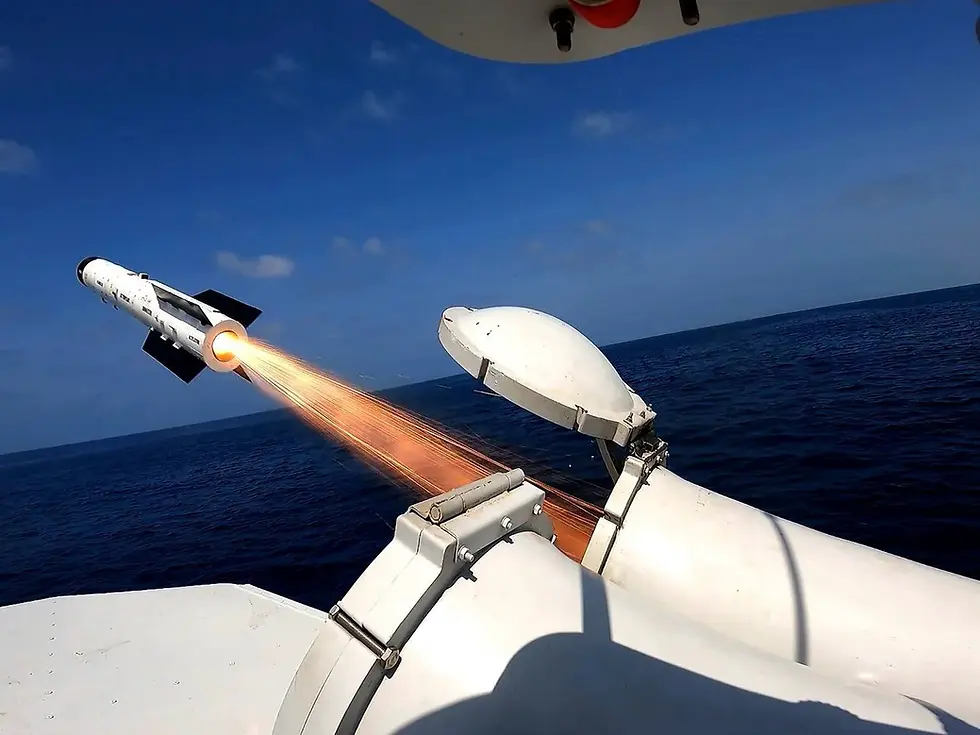
The IRGC navy's exercise, code-named Shahid Mohammad Nazeri, began on Thursday. During the drill, Iranian naval units issued a direct warning to U.S. warships operating nearby, emphasizing that any interference with the exercise could be met with decisive action.
According to state media, the exercise showcases Iran's advanced defensive and offensive systems, enhanced by artificial intelligence. Officials said the drill provided an opportunity to refine operational readiness and tactics, highlighting coordination among missile units, drones, surveillance platforms and electronic warfare systems to bolster the navy's ability to detect and respond to threats.
X user Iran Observer posted a video of the drills taken from Iranian state television, providing visual confirmation of the exercise's scale and the systems involved.
Disputed Islands
The drill also followed the Gulf Cooperation Council's joint summit on Wednesday with Italy in Bahrain, which backed the United Arab Emirates' claim to three disputed islands in the Persian Gulf: Greater Tunb, Lesser Tunb and Abu Musa. Tehran has firmly rejected Abu Dhabi's claims, maintaining that the islands have been part of Iranian territory for centuries.
The islands lie near the strategic Strait of Hormuz, making them highly significant both geopolitically and economically. Control over them has long been disputed between Tehran and Abu Dhabi, with tensions periodically flaring over sovereignty and access to surrounding waters. Last week, a top aide to Iranian Supreme Leader Ayatollah Ali Khamenei issued a stern warning to Gulf states, saying they "should not play with Tehran's red lines" regarding the islands.
Dual Message
Officials say the exercise conveys both reassurance to neighboring countries and a clear warning to adversaries that any miscalculation will face a decisive response. It also highlights Iran's ongoing commitment to regular large-scale exercises to maintain naval readiness and deterrence.
With U.S. forces still active in the region, analysts expect Tehran to continue using naval drills and warnings as strategic leverage, particularly around the Strait of Hormuz, while Washington weighs its next moves in response to Iran's assertive stance.
What Happens Next
The IRGC navy's two-day drill concludes on Friday, but tensions in the region are unlikely to ease. With U.S. warships still operating nearby, Tehran is signaling that it is prepared to continue defending its territorial waters and strategic interests.
How Washington responds could influence the balance of power in the Persian Gulf, particularly around the Strait of Hormuz, a critical route for global oil and gas shipments. The drill also underscores that both sides remain on alert, with Iran using exercises and warnings to assert control while the U.S. monitors regional maritime activity.