
Democracy Dies with Dictatorship
NY Times
Jul 7, 2026
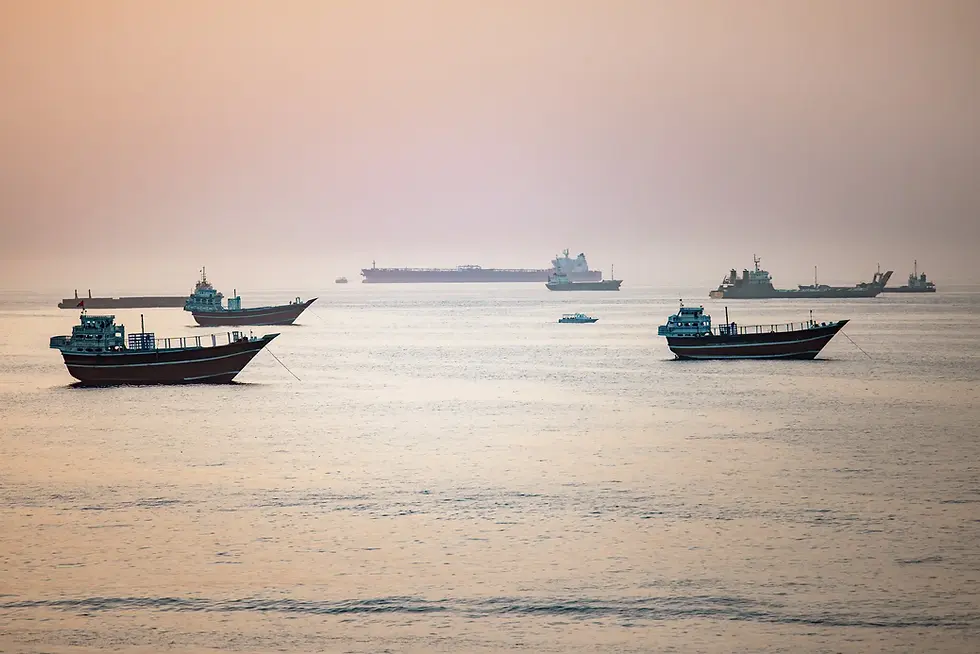
Three Ships Are Attacked in Strait of Hormuz, Threatening Energy Flows
The latest attacks, just weeks after the United States and Iran agreed to try to negotiate a lasting end to their hostilities, show that risks remain.
By Jenny GrossEric Schmitt and Qasim Nauman
Three tankers were hit in the Strait of Hormuz on Tuesday, the British military said, in a burst of violence that threatened to interrupt what has been a steady resumption of energy supplies in the region.
One of the ships that was hit, a Qatari tanker called the Al Rekayyat, was in waters off the Omani coast, according to the International Maritime Organization, a United Nations agency.
Qatar’s foreign ministry condemned the action by Iran, calling it an “unacceptable attack on the security & safety of international maritime navigation.” The ship was a liquefied natural gas carrier, according to Kpler, a maritime data company.
The United Kingdom Maritime Trade Operations, a monitoring center led by Britain’s Royal Navy, said in a notice that a ship off the coast of Oman had caught fire after being struck by an unidentified projectile. The agency said that a second tanker was struck by an unidentified projectile and sustained “structural damage.” A third vessel suffered minor damage after being struck by a drone, the agency said.
No casualties or environmental effects were reported in any of three attacks, according to the British agency.
Iran has said ships can pass through the strait in its waters, but not on the opposite side near Oman. The middle of the strait, which ships used before the Iran war, is considered dangerous because of the risk of mines laid by Iran’s military.
There was no immediate public comment from the authorities in Iran, where a dayslong program of funeral ceremonies is underway for Ayatollah Ali Khamenei, the supreme leader who was killed on the first day of the war. Negotiations between Iran and the United States have been paused until after the funeral.
President Trump was in Turkey for a NATO summit where discussions about the war were expected. He has criticized NATO’s members for not supporting the United States in the war against Iran.
The strait, normally the conduit for a fifth of the world’s oil, was effectively blockaded by Tehran after the United States and Israel attacked Iran in late February. The U.S. Navy also imposed its own blockade of Iranian ports. Economies around the world were hit by the energy supply crunch and rise in prices that followed.
Routes through the Strait of Hormuz
The risk of mines near the central route, long used by commercial ships, has forced ships to take alternative paths: a southern route near Oman or a northern route near Iran.

Traffic around the strait picked up in late June, when the preliminary cease-fire agreement between the United States and Iran went into effect. But traffic fell after a bout of Iranian attacks on ships, which prompted U.S. retaliation against Iranian military infrastructure. On Monday, 36 ships passed through the strait in both directions, according to Kpler. Before the war, more than 100 ships a day routinely passed through the strait.
Just three of the ships that transited on Monday took the Omani route, through which the U.S. Navy is providing guidance.
Many ships switch off their transponders before navigating the strait, making it hard to identify their precise routes and giving an incomplete view of traffic volumes. Kpler, a maritime data company, said that the Qatari ship that was hit was last seen in the Arabian Sea on June 18 before it turned off its location transponder.
The price of Brent crude oil, the global benchmark, rose more than 2 percent on Tuesday, to $73.70 a barrel. As energy exports from the Persian Gulf have recovered, however tentatively, the price of oil has fallen back to near prewar levels. The price of Brent had spiked as high as $118 a barrel during the worst of the fighting.
The effects of the energy shock linger, especially in products derived from oil. The average price of a gallon of gasoline in the United States was $3.79 on Tuesday, according to the AAA motor club, about 27 percent higher than before the war.
Jenny Gross writes about business and economics for The New York Times and is based in London.
Eric Schmitt is a national security correspondent for The Times. He has reported on U.S. military affairs and counterterrorism for more than three decades. Contact him securely on Signal: ericschmitt.36.
Qasim Nauman is a Times editor in Seoul, covering breaking news from around the world.