
Democracy Dies with Dictatorship
AP News
May 5, 2026
Hegseth says ceasefire is not over despite Iranian strikes on UAE and commercial vessels
Edited By BRIDGET BROWN and MICHAEL WARREN
Here’s what we’re following:
Joint Chiefs Chairman Dan Caine told reporters at the Pentagon on Tuesday that Iran’s recent acts of aggression are below the threshold of “major combat operations.” That means Tehran, in the Trump administration’s view, has not violated the tenuous ceasefire. “Since the ceasefire was announced, Iran has fired at commercial vessels nine times and seized two container ships, and they’ve attacked U.S. forces more than ten times – all below the threshold of restarting major combat operations at this point,” Caine said.
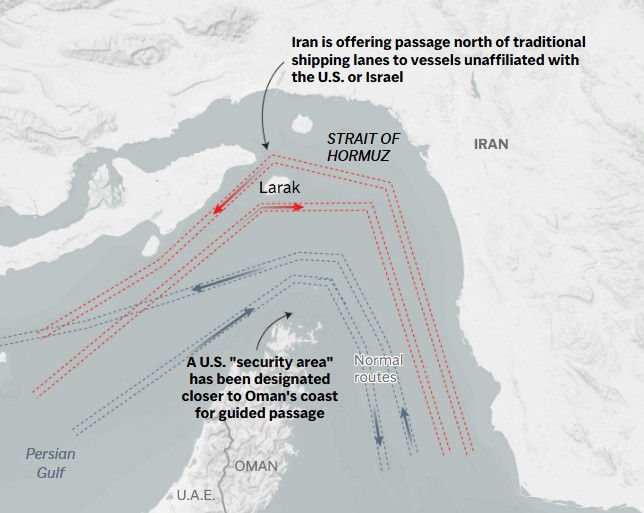
It is unclear what will follow after an American attempt to end Iran’s stranglehold on the strait by creating an “enhanced security area.” A prominent Iranian official accused the U.S. of undermining regional security with the effort and warned that Iran will respond.
The United Arab Emirates is “actively engaging” with missile and drone attacks from Iran, the country’s defense ministry said on X Tuesday evening. It said sounds heard in parts of the Gulf federation are related to the interception of ballistic missiles, cruise missiles and drones.
Secretary of State Marco Rubio will travel to Rome and Vatican City this week in a bid to ease rising tensions between President Donald Trump and Pope Leo XIV over U.S. policies, particularly the Iran war.
Former military officers say reopening the strait remains a daunting task
Former military officers who have served on the Strait of Hormuz have said opening it would be dangerous and highly challenging, even with military escorts, which the U.S. isn’t providing now.
There’s little room to maneuver in the narrow waterway, and Iran can reach all of the strait and its approaches with anti-ship cruise missiles. It also can target vessels with longer-range missiles, drones, fast attack craft and naval mines.
Experts say reducing the threat would involve targeting offensive installations on the ground inside Iran and having constant surveillance and patrols.
Former military officers say reopening the strait remains a daunting task
Former military officers who have served on the Strait of Hormuz have said opening it would be dangerous and highly challenging, even with military escorts, which the U.S. isn’t providing now.
There’s little room to maneuver in the narrow waterway, and Iran can reach all of the strait and its approaches with anti-ship cruise missiles. It also can target vessels with longer-range missiles, drones, fast attack craft and naval mines.
Experts say reducing the threat would involve targeting offensive installations on the ground inside Iran and having constant surveillance and patrols.