
Democracy Dies with Dictatorship
N Y Times
May 23, 2026
Iran and U.S. Officials Signal Progress as Cease-Fire Hangs in Balance
As people across the Middle East braced for the possibility of renewed fighting, officials from both sides said there were signs that they were moving closer to an agreement.
By Aaron BoxermanLeily Nikounazar and Adam Rasgon
Iranian and American officials said there was progress on Saturday in last-ditch diplomatic efforts to stave off a return to full-scale war, as a monthlong cease-fire between the two sides hung in the balance.
Esmail Baghaei, Iran’s Foreign Ministry spokesman, said Washington and Tehran were in the “final stage” of drafting what he called a “memorandum of understanding.” He said the framework would most likely push discussion of Iran’s nuclear program, a sticking point in negotiations, to a later stage.
“Whether, in later stages over the next 30 or 60 days, we discuss nuclear matters or other issues that may be agreed upon is a separate matter,” Mr. Baghaei said in comments carried by Iranian state media. “At this stage, our entire focus is on ending the war.”
“The positions of the two sides are becoming closer,” he added. “We may be able to reach a mutually acceptable solution.”
There was no immediate comment from the White House. But Secretary of State Marco Rubio signaled on Saturday that the two sides could be moving closer to an agreement, even as he left open the option of renewed military action. President Trump has repeatedly threatened in recent days to resume strikes on Iran.
“There’s been some progress done,” said Mr. Rubio during an official visit to India, adding that there could “be news later today.”
“Even as I speak to you now, there’s some work being done,” he said.
Later, in an interview with CBS News, Mr. Trump said the two sides were “getting a lot closer” to finalizing an agreement.
A senior official from a regional country involved in the mediation efforts, and with direct knowledge of the talks, said on Saturday that the United States and Iran appeared close to a deal.
But the signals of progress were accompanied by threats from Iran. Mohammad Bagher Ghalibaf, Iran’s chief negotiator and parliamentary speaker, said that Iran’s military had been rebuilt during the cease-fire, according to Iranian state media.
He went on to say that “if Trump acts foolishly and the war resumes, the response against the United States will certainly be more crushing and bitter than on the first day of the war.”
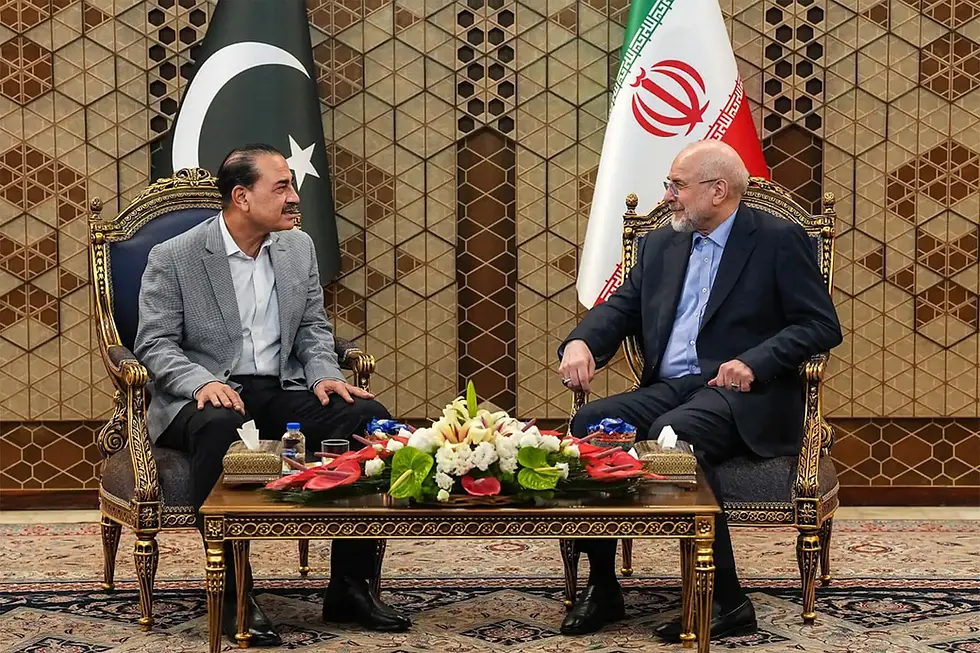
Mr. Ghalibaf reportedly made the comments during a meeting with Pakistan’s army chief, Field Marshal Syed Asim Munir, who left Tehran on Saturday after meeting with Iranian officials. Mr. Munir has played a central role in mediation efforts, and his overnight visit was seen as an intensification in shuttle diplomacy.
On Saturday, Mr. Trump also spoke with Sheikh Tamim bin Hamad Al Thani, the emir of Qatar, to discuss “regional and international efforts to stabilize the cease-fire,” according to a statement by Sheikh Tamim’s office. A Qatari delegation had joined Pakistani mediators in Iran, two diplomats with knowledge of the mediation efforts said on Friday.
Mr. Trump also planned to have a call with many leaders of Arab and Muslim-majority nations on Saturday afternoon, including Qatar, Saudi Arabia, the United Arab Emirates, Pakistan and Turkey, according to three Arab officials who spoke on condition of anonymity because of the sensitivity of the talks.
The United States, Israel and Iran agreed a cease-fire in early April after more than a month of war. The truce was intended to allow for talks on Iran’s nuclear program and the reopening of the Strait of Hormuz, a crucial waterway for oil and gas shipping that Iran has effectively closed since the early days of the war, causing energy prices to soar worldwide.
After about six weeks of on-and-off negotiations, however, the United States and Iran appear to still be far apart on several key issues.
Earlier this week, Mr. Trump said he had pulled back from a “very major attack” against Iran in order to give way for diplomacy. Military analysts are skeptical that further aerial attacks would force Iran to compromise.
On Friday, Abbas Araghchi, the Iranian foreign minister, accused the United States of “excessive demands” in a call with António Guterres, the United Nations secretary general. Mr. Trump recently denounced one Iranian counterproposal as “totally unacceptable.”
Euan Ward, Elian Peltier and Edward Wong contributed reporting.
Aaron Boxerman is a Times reporter covering Israel and Gaza. He is based in Jerusalem.
Adam Rasgon is a reporter for The Times in Jerusalem, covering Israeli and Palestinian affairs.